
Priorities
Dull, tired skin
Skin that looks flat, uneven, or less bright than usual, often with rough surface texture.
Treatments from $199
The short version
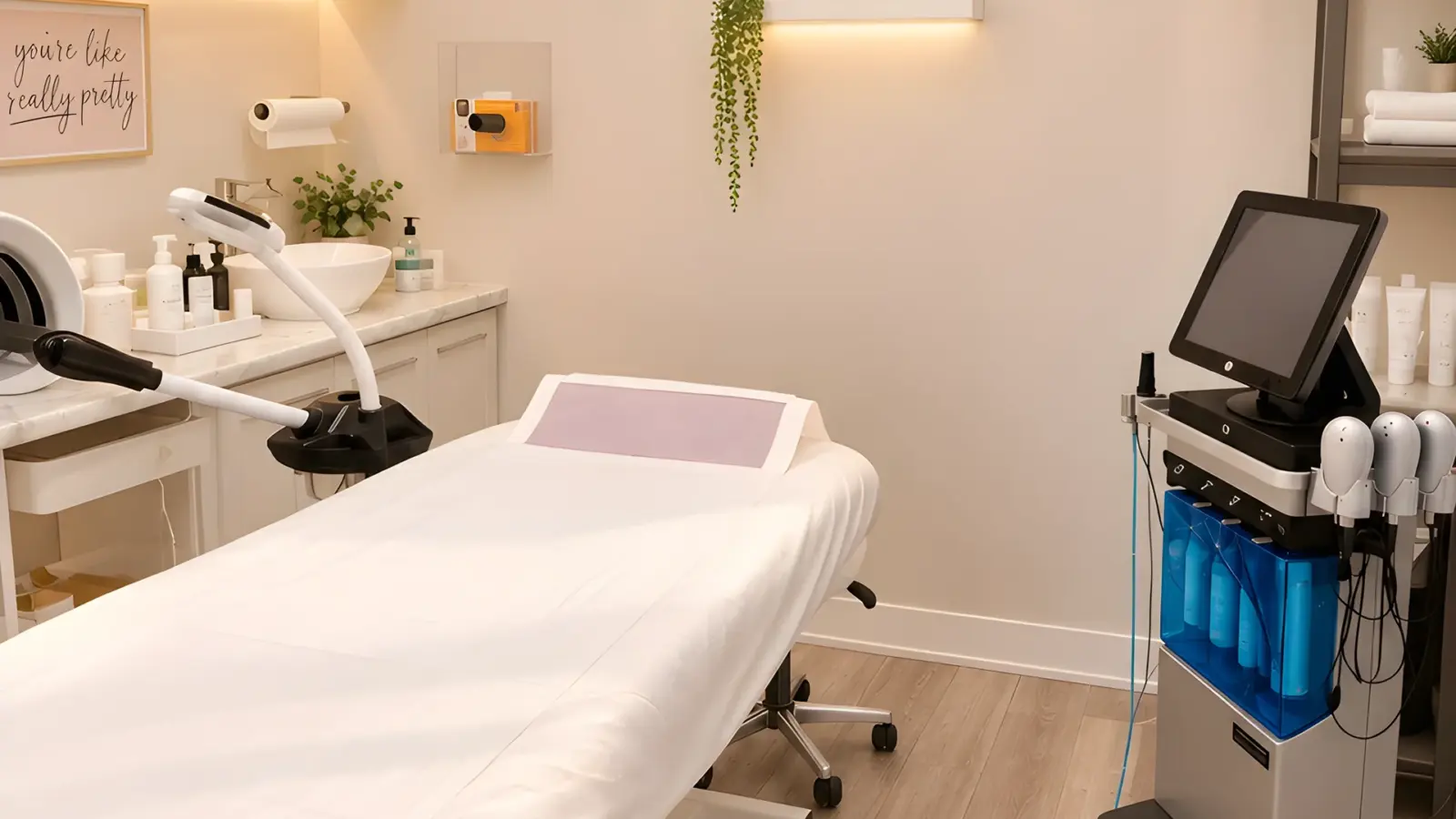
Dull skin isn’t one specific line or spot. It’s an overall lack of brightness, often with rough texture that makes foundation look patchy, and it tends to be more noticeable in winter, when indoor heating dries the skin. It usually responds well to simple treatment: a forty-five-minute facial restores brightness for about a week.
Why it happens
Where your glow goes
Skin renews its surface all the time, but that turnover slows as we age. Add dry winter air from indoor heating, and dead cells pile up on the surface. Uneven, rough skin scatters light rather than reflecting it, so the complexion looks flat.
Renewal slows down
Skin sheds dead cells more slowly with age, so they linger and dull the surface.
Winter air dries it out
Forced-air heat pulls moisture from the outer layer, leaving it rougher and patchier.
Smooth skin catches light
Clearing dead cells evens out the surface so it reflects light, which is the glow people notice.
Sources: Cleveland Clinic, exfoliation
Your options
How we'd approach it
-
Step 1We'd start with
HydraFacial
From $199
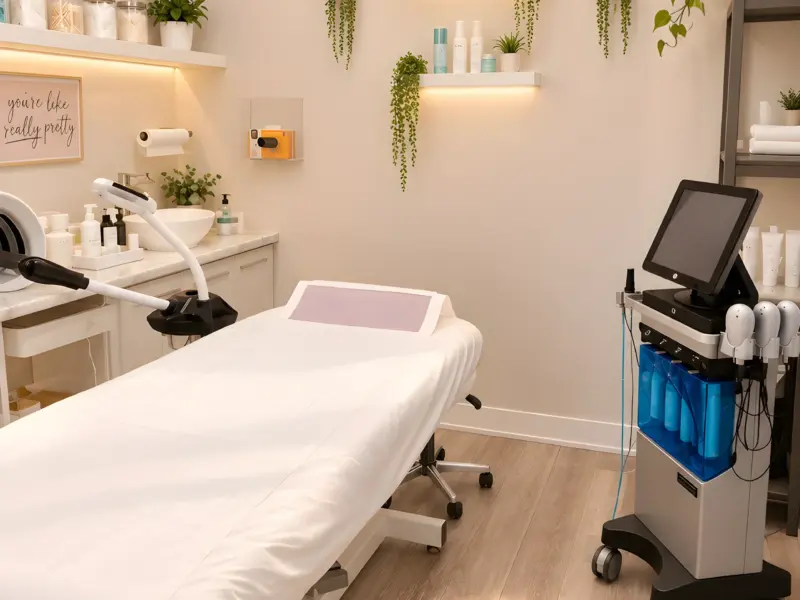
About HydraFacialWe'd suggest starting with a HydraFacial MD with our medical esthetician. A spiral tip under suction lifts dead surface cells, clears out pores, and delivers hydrating serum into freshly cleared skin. Your skin looks brighter right away with no downtime, and the glow lasts five to seven days. Sessions every four to six weeks maintain and build on the results.
-
Step 2If you need a little more
A light VI Peel
From $200
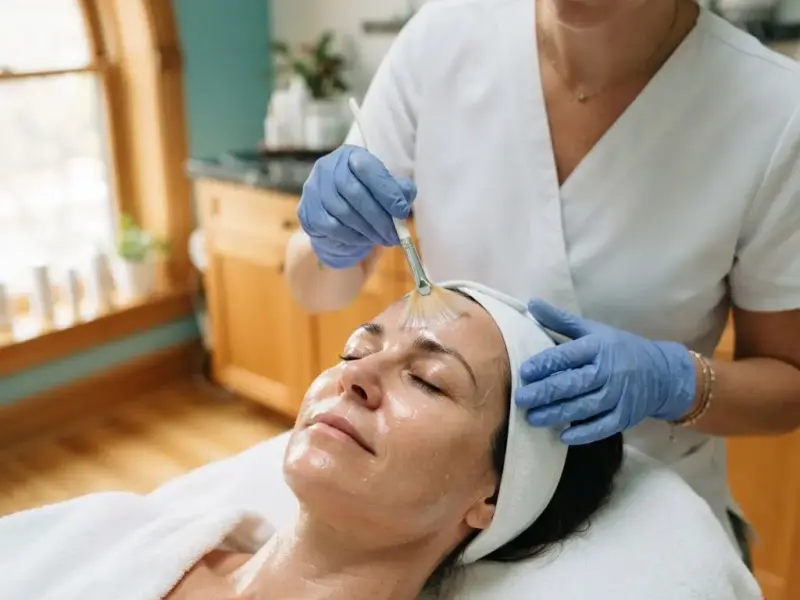
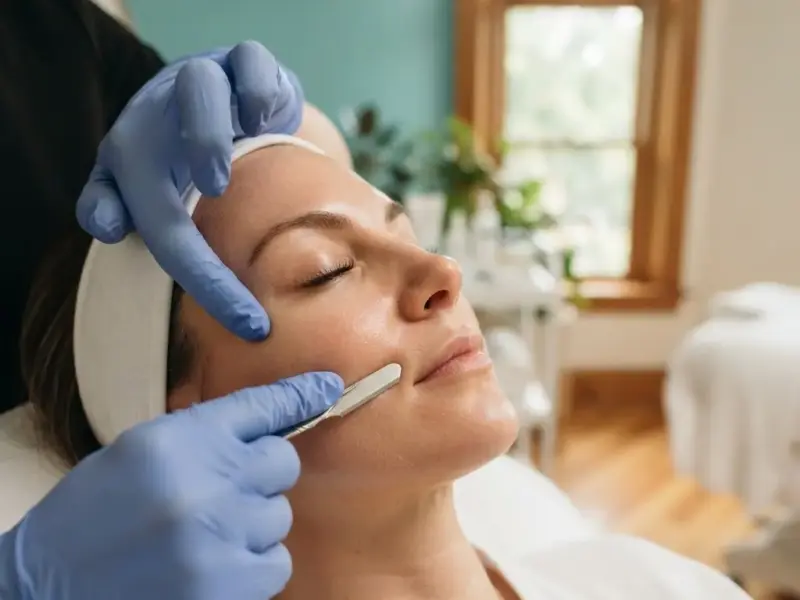
About A light VI PeelIf the dullness is more about uneven tone than dryness, a VI Peel Original can do what the HydraFacial's peel step can't, with a few days of flaking. Dermaplaning isn't on the Lincoln Park booking menu, but you can request it as a HydraFacial add-on at your consult.
Side by side
Your options side by side
All of these refresh the surface with little or no downtime. Here's how they compare.
We'd start with
HydraFacial MD
From $199
- Best for
- Dry, congested skin that needs a deep clean and hydration
- Appointment
- 30 to 45 minutes, no numbing
- Downtime
- None, pink for an hour at most
- First results
- Immediately
- Sessions
- Single, or monthly for 3 to 6 months then quarterly
If you need a little more
Light VI Peel
From $200
- Best for
- Uneven tone that a facial can't shift
- Appointment
- 20 to 45 minutes, no numbing for light peels
- Downtime
- Light peel: pink that evening, flaking days 3 to 7. Medium peel: 7 to 14 days
- First results
- Brighter skin once the flaking stops, about a week out
- Sessions
- Light peels: 3 to 5, every 2 to 5 weeks. Medium: one, repeated no sooner than 3 to 6 months
Dermaplaning, by request
Priced at your consult
- Best for
- Rough, fuzzy texture, as a HydraFacial add-on
- Appointment
- 30 to 45 minutes, no numbing
- Downtime
- None. Pink for an hour or two, product-sensitive for 1 to 3 days
- First results
- Immediately
- Sessions
- Single, repeated every 3 to 6 weeks if wanted
Prices are starting prices from our menu. Your provider will confirm the plan and total cost at your consult. Individual results vary.
What to expect
What to expect with a HydraFacial
Your skin looks brighter as soon as you sit up, and the glow lasts five to seven days. Sessions every four to six weeks build on it.
Same day
Hydrated and matte, with pores visibly clearer. Pink for an hour at most.
Day 1 to 7
Skin stays bright and makeup sits better. This is the best window before an event.
Week 2 to 4
The surface returns to baseline, and congestion starts to rebuild, which is normal.
Month 1
Time for your next session on a monthly cadence.
Month 3 to 6
Series effects on lines, pores, and tone show up in photos.
Timeline for HydraFacial, from our treatment page. Individual results vary.
Our reasoning
Choosing the right treatment for dull skin
First, we’ll review your skincare routine at home. Dullness is often a barrier problem caused by too many actives, hot water on the face, or skipping moisturizer in dry, forced-air heat. A few small tweaks at home can go a long way, and we’re happy to suggest some.
If your skin feels dry and congested, a HydraFacial is a good place to start. A 2024 imaging study of eight volunteers found the outer skin layer thinner right after treatment, back to baseline by two weeks, and no change in collagen, per Skin Research and Technology. It’s a surface treatment with a surface result, which is exactly what dull skin needs. Most people find the glow lasts five to seven days.
If your tone is uneven, we’ll recommend a light VI Peel. With a superficial peel, you can expect redness for 1 to 7 days and scaling for 3 to 7, and you can usually wear makeup the next day, per the AAD. If your skin feels rough and fuzzy, dermaplaning can help, and it’s available by request. It doesn’t make hair grow back thicker. Individual results vary.
Your questions, answered
Can I fit a HydraFacial into a workday?
Yes. The HydraFacial MD takes 45 minutes, with no numbing and no downtime, so you can go straight back to work.
How many days before an event?
Two to five days before. You may be slightly pink for about an hour, and your skin looks brighter right away. Avoid trying a peel for the first time in the three to four weeks before an event, so the flaking is finished well ahead of it. If you add dermaplaning, schedule it one to three days before.
HydraFacial or a peel for winter skin?
It depends on what your skin needs: a HydraFacial if it's dry and congested, a peel if it's blotchy and uneven. In the middle of winter, many people benefit from both. Our microneedling vs peel guide covers what to do when the surface is fine and the concern is texture underneath.
Why does my skin look dull in winter?
Indoor heating dries out the skin's outer layer, and dead cells build up faster than they shed, so the surface looks rough and flat. Gentle exfoliation, a richer moisturizer and a humidifier at home help, and a HydraFacial gives a quick reset.
Can exfoliating too much make skin duller?
Yes. Over-exfoliating irritates the skin barrier, which can make it look red, tight and dull. For most skin, gentle exfoliation once or twice a week at home, plus a professional treatment every four to six weeks, is plenty.
Also used for this
From the clinic
Compare and decide · 6 min read
Microneedling vs chemical peel: pick by problem, not by trend
The simplest way to choose is to consider where the problem is. Scars, pores, and fine lines sit in the dermis, where needles can reach them.…
Treatment guides · 6 min read
How much does microneedling cost? Per session, per series, and what moves the number
Microneedling has 3 price tiers on our menu, and the pen is the same in all of them. What moves the number is what goes into…