
Even out tone, off the top layers
A chemical peel is an acid applied at a set depth: glycolic, lactic, or salicylic for the surface, and TCA for the medium layer. Plan on twenty to 45 minutes in the chair. Expect flaking from about day 3 to day 7 on a light peel, and closer to two weeks on a medium one. At Skinovatio Lincoln Park, we offer superficial and light-medium peels for melasma, acne marks, and the rough texture that years of sun exposure can leave on your cheeks.
$200
to start
At a glance
Chemical peels- Appointment
- 20 to 45 minutes, no numbing for light peels
- Downtime
- Light peel: pink that evening, flaking days 3 to 7. Medium peel: 7 to 14 days
- First results
- Brighter skin once the flaking stops, about a week out
- Full results
- Pigment and texture change at 2 to 4 weeks after a medium peel, cumulative over a light series
- Sessions
- Light peels: 3 to 5, every 2 to 5 weeks. Medium: one, repeated no sooner than 3 to 6 months
- Cost
- From $200. About $50 per payment across 4 with Afterpay or Klarna.
What to expect
What the appointment is like
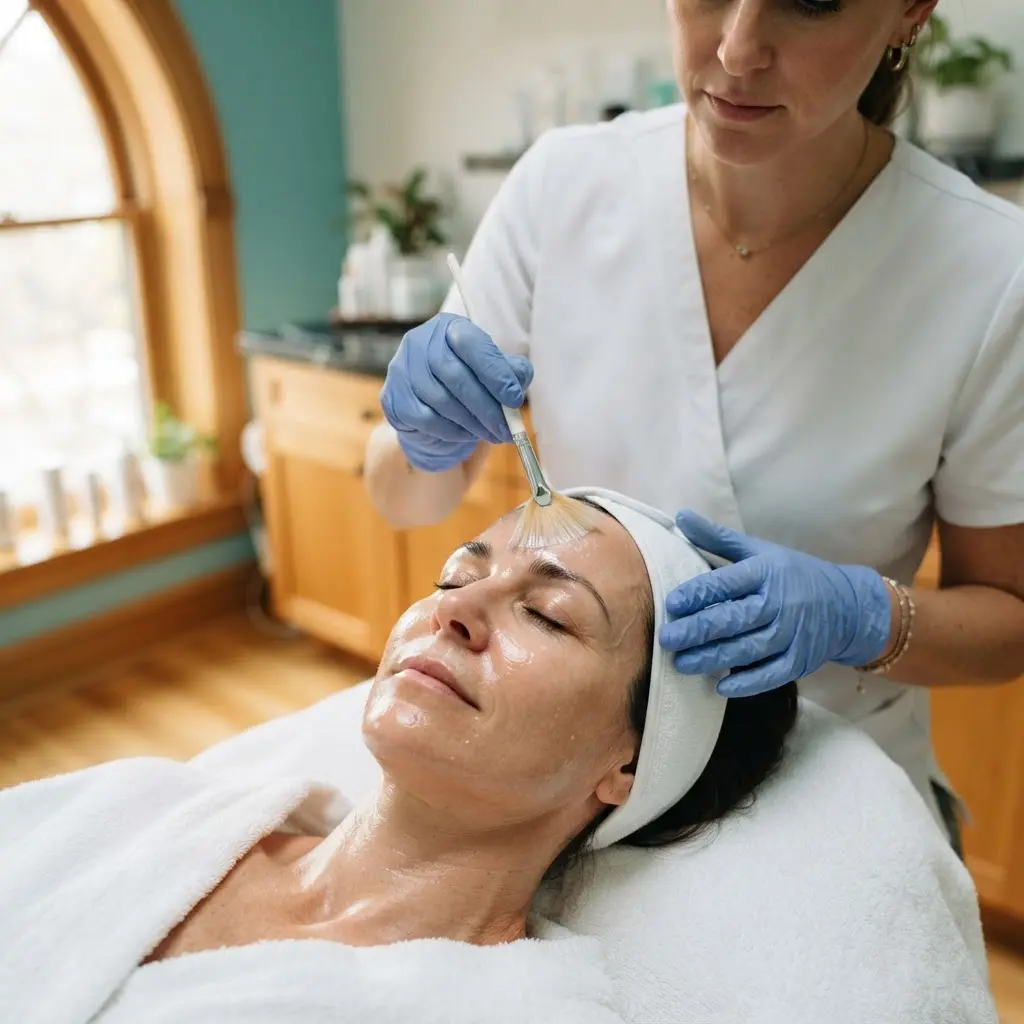
Plan on twenty to 45 minutes, and most of that is prep. Our medical esthetician cleanses and degreases your skin, protects your eyes and nose, and paints the acid on in thin passes. Then we set a timer. A light peel stings and feels hot for a few minutes, then tight. A medium TCA peel stings more, and you’ll see a white frosting where the acid has reached depth. That’s expected. Light peels don’t need numbing.
Consult
We’ll look at your pigment, your pores, and your upcoming plans, ask about retinoids, Accutane, cold sores, aspirin allergy, and pregnancy, and choose a depth. If you’re tan, we’ll book your peel for a later date.
Prep
We cleanse, degrease, and place a barrier on your lips and around your eyes. Please pause retinoids and acids for a few days before, and avoid waxing or dermaplaning the same day as a medium peel.
Peel
Thin passes with a brush, a timer, and a fan. Stinging and heat for a few minutes, and frosting on a medium peel. Neutralized in the room or at home on a schedule.
Before you leave
We finish with a bland moisturizer and sunscreen. You’ll go home with a day-by-day sheet, the moisturizer rule, and your next date if this is a series.
Your results
A predictable timeline
You’ll see your result once your skin heals, per the AAD. After a light peel, that means a brighter surface at about a week, building across the series. After a medium peel, the change in pigment and texture shows at 2 to 4 weeks, and the collagen effect runs 2 to 3 months.
Day 0
Pink and tight by the evening. Any frosting from a medium peel fades in hours.
Days 1 to 2
Tight and slightly darker. Makeup is fine after a light peel. Swelling peaks at 48 hours after a medium one.
Days 3 to 7
The flake begins at the mouth and jawline and moves up. On a medium peel, these are the most visible days.
Week 2
Light peel: clear and brighter. Medium peel: makeup on, and the last flakes are gone.
Weeks 2 to 4
The pigment and texture change from a medium peel shows. If you’re doing a series, your next light peel lands here.
Months 2 to 3
The collagen effect from a medium peel. Your light series is complete, with maintenance every 4 to 8 weeks from here.
What it costs
Clear pricing, planned by the visit
A light glycolic peel and a medium TCA peel are very different treatments. Your cost depends on: depth and brand, one peel versus a series, face only versus face plus neck, chest, or hands, and add-ons like dermaplaning first or LED after.
- The depth and brand of solution
- A single peel versus a series
- Face only versus face plus neck, chest, or hands
- Add-ons like dermaplaning or LED
At Skinovatio Lincoln Park
Chemical peels
$200
to start
- VI Peel Original
- $200
- Advanced or Purify
- $250
- Precision Plus
- $275
- Purify plus Precision Plus
- $375
- Consultation
- $50
- With Afterpay or Klarna
- About $50 × 4 payments
Many people choose the Original at $200 or Precision Plus at $275 for pigment. Plan on 3 to 5 days of visible peeling.
Book your Chemical peels appointmentSimilar purpose, different options
Chemical peel or something else?
Microneedling works in the dermis through thousands of tiny channels, while peels work on the surface and the pigment. For acne scars, the combination beat either alone, per Li and colleagues, so the answer is often both. We walk through the full decision in microneedling vs chemical peel.
IPL photofacial uses filtered light for brown spots and redness. The spots darken, then flake off over about a week, and it clears discrete sun spots more reliably than TCA. It isn’t the right tool for melasma or for skin types V and VI, though, and a peel is the safer route there.
Dermaplaning uses a blade, not an acid. It takes thirty minutes with zero downtime, and a light peel right after it can go deeper.
| Light peel | Medium peel | Microneedling | IPL | |
|---|---|---|---|---|
| Best for | Melasma, dullness, acne marks | Texture, fine lines, stubborn pigment | Scars, texture, pores | Sun spots, redness |
| Depth | Epidermis | Upper dermis | Dermis | Pigment and vessels |
| Downtime | Flake days 3 to 7 | 7 to 14 days | Pink 1 to 2 days | Spots shed by day 7 |
| Sessions | 3 to 5, every 2 to 5 weeks | 1, repeat at 3 to 6 months | 3 to 6, 4 weeks apart | 3 to 5, 3 to 4 weeks apart |
| Darker skin | Yes | Test spot first | Yes | Usually no |
Best for
- Light peel
- Melasma, dullness, acne marks
- Medium peel
- Texture, fine lines, stubborn pigment
- Microneedling
- Scars, texture, pores
- IPL
- Sun spots, redness
Depth
- Light peel
- Epidermis
- Medium peel
- Upper dermis
- Microneedling
- Dermis
- IPL
- Pigment and vessels
Downtime
- Light peel
- Flake days 3 to 7
- Medium peel
- 7 to 14 days
- Microneedling
- Pink 1 to 2 days
- IPL
- Spots shed by day 7
Sessions
- Light peel
- 3 to 5, every 2 to 5 weeks
- Medium peel
- 1, repeat at 3 to 6 months
- Microneedling
- 3 to 6, 4 weeks apart
- IPL
- 3 to 5, 3 to 4 weeks apart
Darker skin
- Light peel
- Yes
- Medium peel
- Test spot first
- Microneedling
- Yes
- IPL
- Usually no
Is it right for me?
Who it’s for, and who it isn’t
Peels are a good fit if you have pigment, texture, or acne in the top layers of your skin, can stay out of direct sun for two weeks on either side, and can plan around the flaking days of a medium peel. Skin types I to III can take any depth on our menu. Types IV to VI do well with superficial peels, and we approach medium peels carefully.
A good fit for
- Sun spots, blotchy tone, and acne marks
- Managed melasma (lighter agents, never in summer)
- Rough, dull surface texture
- Darker skin, with light peels chosen over light devices
Not recommended
- Tanned skin, or the two weeks before an event
- Loose skin (Forma or Morpheus8 fit better)
- An active cold sore, open skin, or a sunburn
- A salicylic acid allergy (that includes most aspirin allergies)
Chemical peels don’t carry FDA clearance, the solutions are cosmetics or compounded products. The FDA has warned that at-home peels have caused serious injuries and that a peel belongs with a licensed, trained provider.
In detail
What it treats
The American Academy of Dermatology’s list, per its overview, is acne, age spots, uneven tone, dullness, fine lines, freckles, melasma, rough skin, and sun damage. We’ve grouped them by concern:
This is the concern we see most often. Melasma is the symmetrical brown patching on the cheekbones and upper lip that darkens in summer. Sun spots are discrete freckles. Post-acne marks are the flat stains that stick around after the pimple is gone. A series of light peels lifts all three gradually. With melasma, the goal is to manage it, not cure it. It comes back with sun and hormones, so we schedule the series in fall and winter, when sun exposure is lower, and rely on daily sunscreen through the summer.
Salicylic acid is oil-soluble, so it gets down into the pore instead of sitting on top. A salicylic peel every 2 to 5 weeks helps calm active breakouts and shine. If you’re allergic to aspirin, skip this one, since it’s in the same family, and we’ll recommend another option.
Higher-strength glycolic and medium-depth TCA reach the upper dermis, where a controlled injury rebuilds collagen. That’s the peel we’d suggest for crepey cheeks, lines beside the mouth, and skin that looks rough. It’s one medium peel, rather than a series.
A light peel every month or so works well as maintenance, with minimal flaking and a brighter surface for two weeks. If you have darker skin, superficial peels are widely used and work well for post-acne marks. Medium peels do carry a higher risk of pigment change in skin of color, per the AAD’s FAQ page. We don’t do medium TCA on skin types IV to VI without a test spot first.
How it works
An acid loosens the bonds between dead surface cells so they shed in a sheet. At medium depth it causes a controlled injury into the upper dermis, and the skin rebuilds with more even pigment and a smoother surface, per the American Society for Dermatologic Surgery. Superficial peels refresh the surface, which is why we do them as a series. Medium peels remodel collagen, so one will do for a while.
The depth comes down to the agent and its concentration. Superficial peels use glycolic, lactic, mandelic, salicylic, or a Jessner’s mix. Medium peels use stronger glycolic or TCA, often 20 to 35 percent. Deep phenol peels are a physician procedure with sedation, so they aren’t on our menu. You’ll find VI Peel on our booking menu, in several strengths.
Two findings are useful to know before you book. For acne scars, a peel combined with microneedling ranked highest across 24 randomized trials in a 2024 network meta-analysis, per Li and colleagues. For discrete sun spots, TCA peels cleared the spot in 12 to 46 percent of cases, well below IPL at 74.6 to 90 percent, per a 2025 systematic review. So peels work best on scars when paired with microneedling, and IPL is the stronger choice for isolated spots.
Peel solutions are cosmetics or compounded products, not cleared devices or approved drugs, so there’s no FDA claim to make.
Afterwards
Downtime and aftercare
The AAD’s range for a superficial peel is 1 to 7 days of redness, then 3 to 7 days of scaling. In practice, a light glycolic peel usually looks pink the same evening, feels tight on days 1 and 2, starts flaking from day 3, and is done by day 7. Makeup is usually fine the next day, per the ASDS.
A medium peel takes 7 to 14 days. Your skin will be red and swollen, and the swelling gets worse for 48 hours before it improves. You’ll do daily soaks and ointment, plus an antiviral if you get cold sores. Camouflage makeup is fine from day 5 to 7. Stay out of the sun until you’ve healed.
Planning around your schedule
A light peel on a Thursday afternoon works well for many people: makeup is fine on Friday, the flaking happens over the weekend, and skin is usually clear by Wednesday. If you book on a Monday, the most visible flaking days, 3 to 5, fall on Thursday and Friday. For a medium peel, plan for a week of visible redness and peeling, with some redness into the second week.
A few simple rules
Wear sunscreen every morning, since freshly peeled skin burns and pigments fast. Don’t pick the flakes, because that can leave a dark mark. Hold off on retinoids and acids until the flaking stops, and stick with a gentle cleanser and bland moisturizer. It’s best to skip sweaty workouts for 24 to 48 hours after a medium peel, and to avoid waxing for a week.
A note about winter
Peel series are best scheduled in the colder months, when sun exposure is lower and melasma is less active. Cold wind and indoor heating can also make days 3 to 7 feel tighter than usual, so moisturize about twice as often as you normally would. Winter sun still affects pigment, so keep up daily sunscreen.
Why here
Why Lincoln Park
Much of the pigment we treat comes from summer sun, which is why we run peel series when sun exposure is lower. For a wedding or other event, schedule your last peel 3 to 4 weeks before, and no closer than two weeks.
You’ll find us on Lincoln Avenue just north of Wrightwood, a block up from the Apollo Theater. Take the Brown Line to Diversey, then head south on Lincoln, or the Red, Brown, or Purple Line to Fullerton, then head north. The 11 Lincoln bus stops on the block. There are meters on Lincoln, and free spots on the side streets west of Clark if you check the cleaning signs. Your peel is done by our medical esthetician. You’ll find our map and hours on the page for our Lincoln Park med spa.
Questions
Common questions, answered
A chemical peel is an acid solution applied at a controlled depth so the damaged top layers of skin shed and rebuild smoother and more even. Superficial peels use glycolic, lactic, mandelic, or salicylic acid and refresh the surface. Medium peels use stronger glycolic or TCA and reach the upper dermis, where they rebuild collagen.
A superficial peel heals in about a week: you’ll be pink the first evening, flaking from day 3, and clear by day 7. The American Academy of Dermatology’s full range is 1 to 7 days of redness, then 3 to 7 days of scaling. A medium peel takes 7 to 14 days, with makeup possible from day 5 to 7.
Dermaplaning is a blade that removes dead surface cells and fine facial hair in 30 minutes with no downtime. A chemical peel is an acid that changes pigment and texture and comes with a few days of flaking. If you’d like a smooth surface this week, dermaplaning is a good choice. If you’re hoping to change melasma, post-acne marks, or fine lines, a peel is the better fit.
Superficial if your concern is dullness, active acne, post-acne marks, or melasma, which is treated gently and repeatedly rather than aggressively. Medium if your concern is texture, fine lines, or stubborn sun damage on lighter skin and you can spare a recovery week. Darker skin types start superficial in every case. We’ll choose the depth with you at your consult.
The peel brand on the Skinovatio Lincoln Park booking menu is VI Peel, in several strengths. The depth matters more than the label: superficial peels are glycolic, lactic, mandelic, salicylic, or a Jessner’s blend, and medium peels are TCA at roughly 20 to 35 percent. At your consult, we’ll tell you which product we’re planning for your skin.
Yes, it can help manage melasma, though it isn’t a cure. A series of superficial peels, spaced 2 to 5 weeks apart and run in the low-sun months, lightens melasma on the cheeks and upper lip. It returns with sun and hormonal shifts, so the plan includes daily sunscreen and often a topical from a dermatologist. Medium peels and IPL can make melasma rebound, so we keep melasma peels gentle.
It can partly help. A peel on its own flattens surface marks and evens the color left behind by acne, but it doesn’t fill pitted scars. A 2024 network meta-analysis of 24 randomized trials ranked a peel combined with microneedling as the most effective option for acne scars, per Li and colleagues. If you have pitted scarring, we’ll plan both.
On a light peel the flaking starts around day 3 and is done by day 7, so a Thursday peel flakes over the weekend and is clear by midweek. On a medium peel the flaking runs days 3 to 7 and the redness lasts into the second week, so book it ahead of a week without important meetings or events.
Aim for three to four weeks out, and never inside two. That way the flaking is finished and you’ll have a week of brightness before the photos. For a series, start four to five months out so the last peel lands at the 3 to 4 week mark. A medium peel needs at least four weeks, and six is even better.
It can make it feel worse. Cold wind and forced-air heat dry the skin, so days 3 to 7 feel tighter and the flakes look more obvious. Use a bland moisturizer twice as often as usual, and sunscreen every morning, even in January. Winter is still the safest peel season here, because low sun means less risk of the pigment coming straight back.
A peel is temporary by design. Your skin turns over and settles within one to two weeks. On a first visit, we start with the lowest strength that will make a difference, and only go deeper once we’ve seen how your skin responds.
Keep exploring
Related treatments
Related priorities
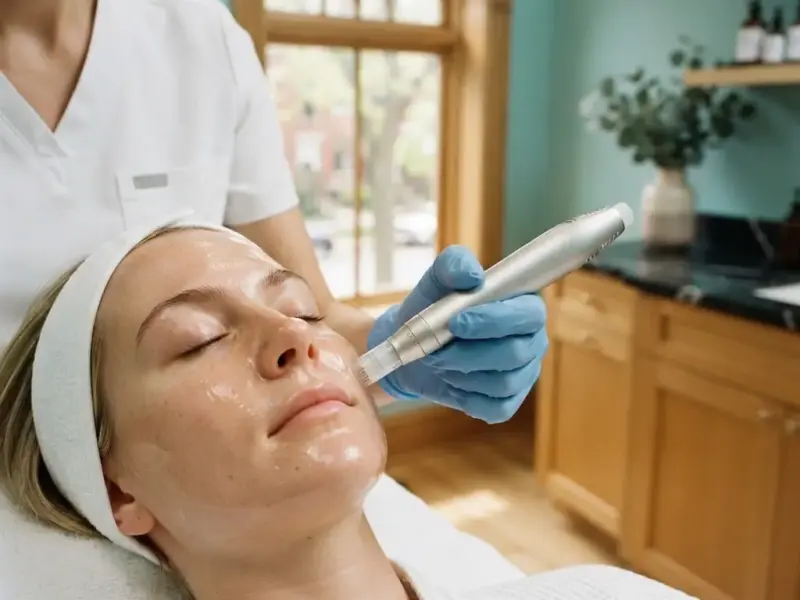
Microneedling
From $347A first step for pores, fine lines, and texture, using hyaluronic acid serum
Learn more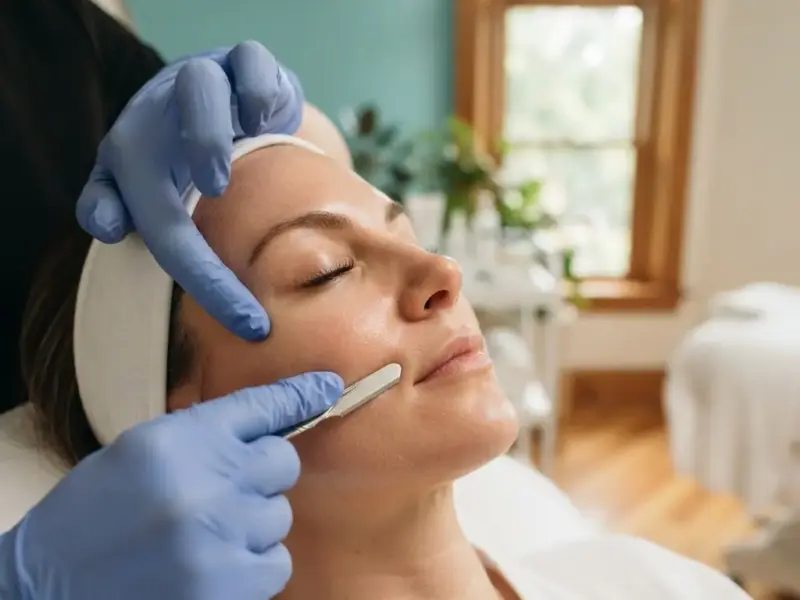
Dermaplaning
Priced at your consultA 30-minute blade exfoliation for smooth skin and flat makeup
Learn more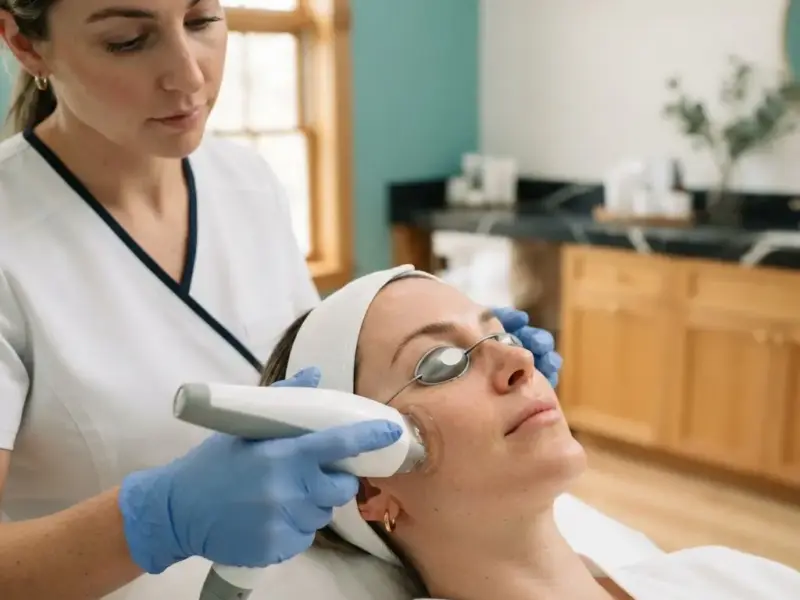
Sun spots & redness (IPL)
From $249Light treatment for sun spots, redness, and rosacea, October to April
Learn more
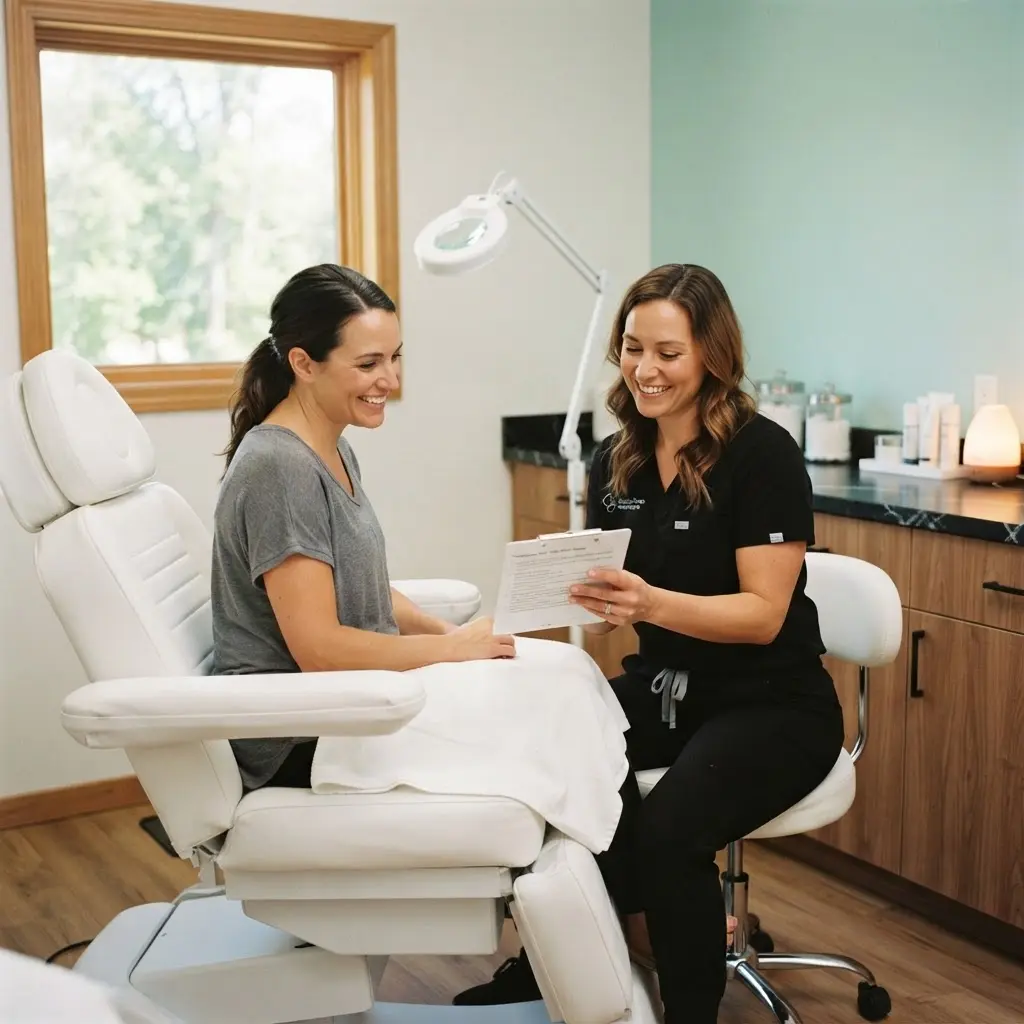
Start with a consult
Tell us what you’d like to work on. We’ll assess your skin and goals, walk you through your Chemical peels options, and give you a clear plan and price before anything begins.
Afterpay and Klarna are available at checkout for eligible treatments.