
Wrinkle Relaxers that leave you looking rested, not different
Many med spas offer Botox. Your results depend on where the units go and who decides the dose. At Skinovatio Lincoln Park, your injector maps your forehead, glabella, and crow’s feet while your muscles are moving, before anything is drawn up. They choose the product from five options, write your plan down, and price it by the plan, not the unit. It starts working in a few days, settles by day 14, and holds for three to four months.
$480
a visit, to start
At a glance
Botox- Appointment
- 10 to 20 minutes, no numbing cream
- Downtime
- Bumps for 20 minutes, possible pinpoint bruise
- First results
- 3 to 7 days
- Full results
- Day 14
- Sessions
- One, repeated every 3 to 4 months
- Cost
- From $480 a visit. About $120 per payment across 4 with Afterpay or Klarna.
What to expect
What the appointment is like
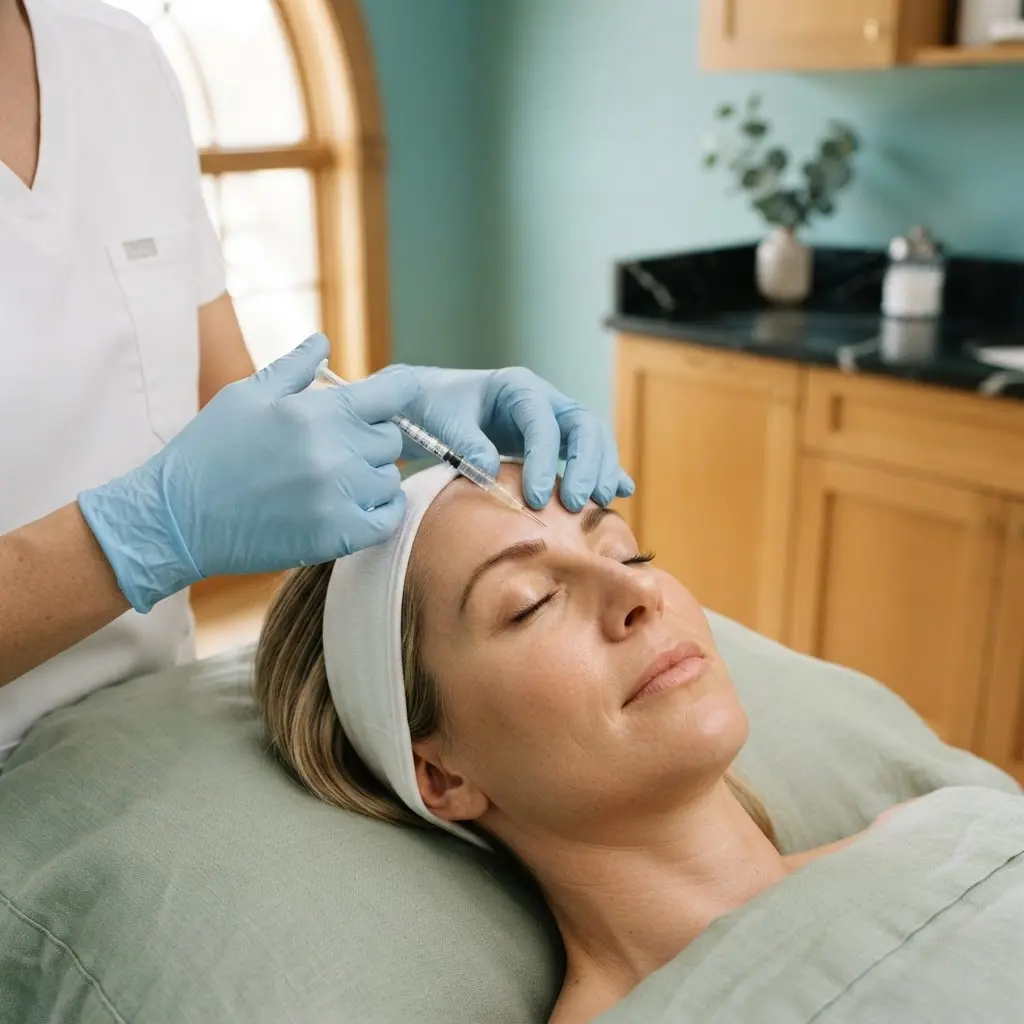
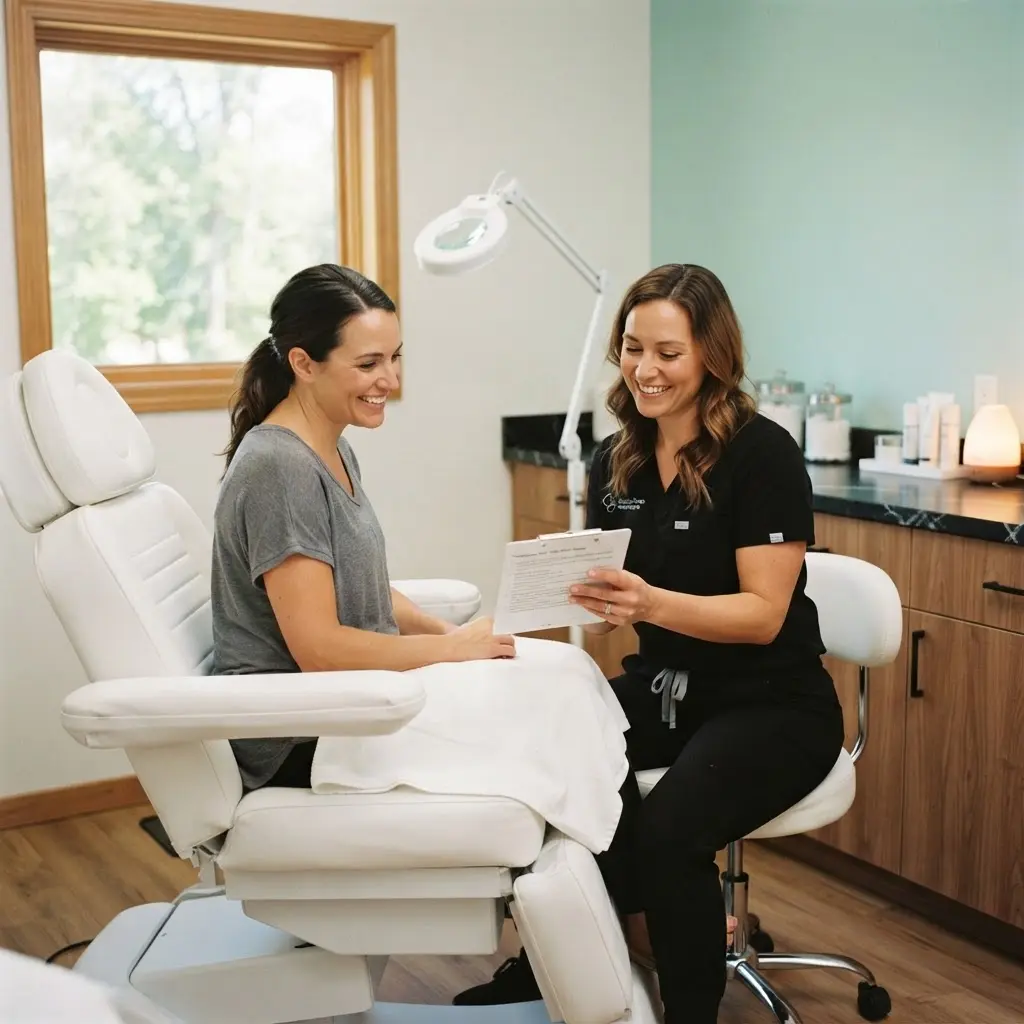
Plan on ten to twenty minutes for one to three areas, and you’ll sit comfortably upright. Your injector watches you frown and lift, marks the points, and takes a photo at rest and in motion. Then come a few quick pinches with a very fine needle. Ice or vibration is available if you’d like it, and numbing cream isn’t needed.
Map
You’ll frown, lift, and squint while your injector marks the points and chooses the product.
Photos
We take them at rest and in motion, so we have something to compare against at day 14.
Inject
A few quick pinches per area. Ten to twenty minutes total.
Record
We write down your product, areas, and dose, so your next visit starts from here.
Before you leave
Avoid rubbing, stay upright for a few hours, and we’ll book your day-14 check if you’d like one.
Your results
A predictable timeline
Results aren’t immediate. Softening starts within three to seven days, and in Botox’s trials 74 percent of patients were responders by day 7. One head-to-head study found Xeomin about two days faster than Botox and Dysport, and slower onset in men overall, but other trials disagree, so expect a few days, with the full effect at two weeks. Day 14 is also when any touch-up for an under-treated area would happen.
Day 0
Small bumps for about 20 minutes, then back to your normal day.
Day 3 to 5
Frowning takes more effort, and the 11s soften first.
Day 7
Many people see the change by now. 74 percent had responded at this point in Botox’s trials.
Day 14
Full effect. We’ll compare your photos and touch up if needed.
Month 3 to 4
Movement returns gradually. Rebook once you notice it.
Daxxify
Median 24 weeks in trials, so half of patients got less.
What it costs
Clear pricing, planned by the visit
We price by the plan, not the unit. A few things shape your cost: how many areas are mapped, the dose each one needs (heavier muscles and masseters need more, and men usually do), which of the five products you choose, and whether a day-14 touch-up is included. A preventative plan is lighter than a full upper-face plan, and a masseter plan is priced as its own line.
- How many areas you treat
- How many units each area needs
- Which brand you choose
- Whether the two-week touch-up is included
At Skinovatio Lincoln Park
Botox
$480
a visit, to start
- Jeuveau and Daxxify
- $12 per unit
- Consultation
- $50
- With Afterpay or Klarna
- About $120 × 4 payments
Many first visits treat the forehead, the 11s and crow’s feet, about 40 to 56 units, so $480 to $672. Plan on coming back every 3 to 4 months. Jeuveau and Daxxify are the two on the Lincoln Park booking menu, and we can discuss the other products at your consult.
Book your Botox appointmentSimilar purpose, different options
Botox or something else?
Two comparisons come up often. Filler is for volume and static folds, while toxin is for movement. If you’d like a smoother forehead and fuller lips, you’d need both, on different visits. PRF under the eyes is often the better answer when tired-looking eyes are what bring you to a Botox consult, because toxin can’t fix a hollow or a dark circle.
The other comparison is between the five products. Onset is a few days for all of them. Diffusion, the 2018 Dover review concluded, is dose dependent and not a function of the brand’s protein complex, so one product can’t fairly be said to “spread more” than another, per Dover and colleagues in Dermatologic Surgery. The real differences are on the label, and here’s how they compare.
| Approved for | Onset | Duration | What’s different | |
|---|---|---|---|---|
| Botox Cosmetic | 11s, forehead, crow’s feet, neck bands | A few days | 3 to 4 months | The reference product, widest label |
| Dysport | 11s, adults under 65 | A few days | Up to 4 months | Different unit scale, about 3 to 1 against Botox |
| Xeomin | 11s, forehead, crow’s feet | Fastest in one trial | 3 to 4 months | No accessory proteins, stored unrefrigerated |
| Jeuveau | 11s only | A few days | 3 to 4 months | Aesthetic-only brand, 20-unit labeled glabellar dose like Botox |
| Daxxify | 11s | A few days | Median 24 weeks | Peptide excipient, no human albumin, longest median |
Botox Cosmetic
- Approved for
- 11s, forehead, crow’s feet, neck bands
- Onset
- A few days
- Duration
- 3 to 4 months
- What’s different
- The reference product, widest label
Dysport
- Approved for
- 11s, adults under 65
- Onset
- A few days
- Duration
- Up to 4 months
- What’s different
- Different unit scale, about 3 to 1 against Botox
Xeomin
- Approved for
- 11s, forehead, crow’s feet
- Onset
- Fastest in one trial
- Duration
- 3 to 4 months
- What’s different
- No accessory proteins, stored unrefrigerated
Jeuveau
- Approved for
- 11s only
- Onset
- A few days
- Duration
- 3 to 4 months
- What’s different
- Aesthetic-only brand, 20-unit labeled glabellar dose like Botox
Daxxify
- Approved for
- 11s
- Onset
- A few days
- Duration
- Median 24 weeks
- What’s different
- Peptide excipient, no human albumin, longest median
Which one suits you best depends on your muscle pattern and the interval you’d like, and we’ll help you choose. Our post on Xeomin vs Botox goes into the purity and onset claims, and the cost post explains why a Dysport unit count is never a Botox unit count.
Is it right for me?
Who it’s for, and who it isn’t
Botox tends to suit adults with movement lines they’d like to soften, including those who want to keep early lines from setting in. The mapping is the same; the dose is lighter. Older skin does respond less: in Botox’s trials, 39 percent of patients 65 and over were responders at day 30 versus 83 percent under 65, and Dysport’s approval is limited to adults under 65.
A good fit for
- Adults with lines that show when they move who want them softer
- Patients who want to keep some natural expression
- People starting with the frown lines, forehead, or crow’s feet
- Anyone wanting a rested look with no downtime
Not recommended
- During pregnancy or breastfeeding, without exception
- Over an active skin infection at the site
- Lines etched in at rest (filler or resurfacing fit better)
- Discuss first with a neuromuscular condition or certain medications
Possible side effects include temporary eyelid droop (3 percent of frown-line patients) and a heavy brow (2 percent of forehead patients). We’ll review your full history at your consult.
In detail
What Botox can help with
Botox treats lines caused by movement: the 11s that appear when you frown, the forehead creases that form when you raise your brows, and the crow’s feet that fan out when you smile. Those are the lines a neuromodulator softens. If a line is still there when your face is relaxed, it’s etched into the skin, and we may recommend filler or resurfacing instead.
We note what’s FDA-approved as we go. All five products are FDA-approved for the 11s. Botox and Xeomin are also approved for forehead lines and crow’s feet. Botox alone is approved for neck bands, as of its October 2024 label, per the prescribing information. Everything else below is off-label, meaning it’s common and studied but outside what the FDA reviewed.
These are the horizontal lines that show up when you lift your brows. Your forehead muscle holds your brows up, so this is where injector skill matters most. Too much can trade lines for a heavy brow, which happened to 2 percent of patients in Botox’s forehead trials. That’s why we treat the forehead with the 11s in the same visit, so the lifting and frowning muscles stay balanced, and we use a lighter dose on the forehead.
The vertical creases between your brows. It’s the most studied area and the one every product is approved for. In Botox’s trials, 80 percent of patients were rated responders at day 30. Strong frowners may need a fuller dose than light frowners, and we set that dose by watching you frown.
The fan of lines at the outer corners of your eyes when you smile, treated on both sides. Placed too close to the eye, it can cause eyelid swelling (1 percent in the trials) or flatten your smile, so careful placement matters even more than the unit count here.
A preventative plan uses lighter doses, fewer areas, and longer intervals. The aim is to soften the movement that’s starting to etch a line and help keep it from becoming more deeply set over time. You keep your expressions and lose the crease forming between them. That’s what “baby Botox” means: the same product, in a smaller plan.
This includes the lip flip (a small dose at the edge of the upper lip so more of it shows when you smile, with no volume added), chin dimpling, and platysmal bands in the neck. These are off-label for all products except Botox for the neck bands, and we’ll talk through which of them are right for you at your consult.
This is the jaw muscle that clenches and grinds, and it can widen the lower face when it’s overworked. A dose into each masseter relaxes the clench and, over two to three months, slims the jawline as the muscle rests. It’s off-label with every product, and because it’s a heavier muscle, it takes more units.
Men tend to have heavier muscles, which means more units, with the same products. Our post on Botox for men in Lincoln Park walks you through the timeline, and if you’re also considering PRP for hair, we can plan both at your consult.
How it works
All five are botulinum toxin type A, prescription drugs approved by the FDA under a biologics license. Each one blocks acetylcholine release at the junction between nerve and muscle, so the injected muscle relaxes and the skin over it stops creasing. Nerve endings recover over months, which is why it wears off, per the Botox Cosmetic label. Every label carries the same boxed warning: the effect can spread from the injection site, and in rare cases cause swallowing or breathing trouble. That’s why your injector sets your dose individually.
What a unit is, and why shopping by the unit can mislead you
A unit is a measure of biological activity, not a volume. Your injector reconstitutes a dry vial with saline, and the amount of saline decides how many units sit in each drop. Two clinics quoting the same per-unit number can be putting different amounts of drug in your forehead, depending on dilution and where the drops go. Units also don’t convert across brands: the head-to-head trial used a 1 to 3 Botox-to-Dysport ratio and 1 to 1 for Xeomin, and Xeomin’s label says its units cannot be converted into units of any other toxin.
A per-unit price only has meaning once someone has decided how many units you need. Your result comes from placement and dilution, which is why we price the plan instead. Our post on what Botox really costs in Chicago walks through the arithmetic clinic by clinic, without naming any.
Afterwards
Downtime and aftercare
On day 0, expect small bumps for about 20 minutes and possibly a pinpoint bruise. Most people go straight back to their normal day. On days 1 to 7, a bruise, if you have one, lasts about a week. A mild headache is uncommon. The American Academy of Dermatology’s aftercare advice is short: avoid rubbing or massaging the areas, be gentle with makeup, and wait two hours before strenuous exercise, per the AAD.
Waiting 24 hours before a hard run or heavy lift is also sensible, so if you have a race coming up, book a few days ahead rather than the day before. A 2018 review found most post-treatment rules are used despite a lack of evidence, so we keep ours short: no rubbing, no face-down massage or tight hat that day, and alcohol and ibuprofen only matter for bruising.
Why here
Why Lincoln Park
You’ll find us on Lincoln Avenue just north of Wrightwood, a block up from the Apollo Theater, where Lincoln Park meets Lakeview. Take the Brown Line to Diversey, then head south on Lincoln, or take the Red, Brown, or Purple Line to Fullerton and head north. The 11 Lincoln bus stops on the block. There are meters on Lincoln, and free spots on the side streets west of Clark if you check the cleaning signs. The visit takes about 20 minutes, and any bumps settle within half an hour, so it’s easy to fit into a workday.
We can also help you time treatment around events. For a wedding, aim for 2 to 4 weeks before: you’ll see the full effect by day 14, with time for a touch-up inside that window. Your injector is our nurse practitioner, and the plan they write for you is what you’re paying for.
Questions
Common questions, answered
It depends on the area, how strongly the muscle moves, your sex, and the product, since units don’t convert across brands. The labeled dose for the 11s with Botox is 20 units, and real plans run lighter or heavier once your injector watches you frown. Masseters and men usually take more, and a preventative plan takes less.
We’ll write the number into your plan at your consult and price the plan, not the unit, so the dose stays a clinical decision.
Baby Botox is a lighter plan with the same product: smaller doses, fewer areas, and often longer intervals. The aim is to soften movement enough that a forming line doesn’t set, while you keep your expressions.
It isn’t a different drug, just a smaller dose, placed carefully.
A good time to start is when a movement line begins to stay faintly visible at rest. Before that, there’s usually nothing to prevent yet.
If the line is only there when you frown, a light plan can help keep it from etching. If it isn’t there at all, there’s no need to start yet, and we can reassess in a year.
Botox Cosmetic is an FDA-approved prescription drug with a well-documented side-effect profile. The common effects are local: headache (9 percent in forehead trials), eyelid droop (3 percent in glabellar trials), a bruise, a heavy brow. Serious effects are rare, and every label carries a boxed warning that the toxin can spread and cause swallowing or breathing trouble.
Dosing more often than every three months hasn’t been studied, so we won’t schedule treatments closer together than that.
No. There are no studies or adequate data on Botox Cosmetic in pregnancy, per its label, and the same is true for the other four products. For your safety, we don’t treat during pregnancy or breastfeeding.
You’re welcome to book once you’ve finished breastfeeding.
The American Academy of Dermatology recommends waiting two hours before strenuous exercise. It’s best to wait 24 hours before a hard run or a heavy lift, mostly so you’re not tempted to rub a sweaty forehead, and to reduce bruising.
Aim for two to four weeks before the wedding. The full effect lands at day 14, which is when any touch-up for an under-treated area would happen. Three weeks out leaves room for both.
If it’s your first time, we’d recommend a trial run three to four months earlier, so you know how your face responds before the wedding.
Yes, and we’ll discuss it at your consult. A dose into each masseter relaxes the clenching muscle within a couple of weeks and slims a wide lower face over two to three months as the muscle rests. It’s off-label with every product, and it needs more units than the upper face because the muscle is large, so your first visit is usually the biggest plan.
Yes, we offer all four alongside Botox, and all five are on the Lincoln Park online booking menu. All are FDA-approved for the 11s. Xeomin is also approved for the forehead and crow’s feet. Dysport uses a different unit scale. Jeuveau is glabella only. Daxxify uses a peptide instead of human albumin and held a result for a median of 24 weeks in trials.
Your injector will help you choose the product after mapping your face.
Not when it’s dosed for your face. The frozen look comes from over-treating the forehead, which drops the brows and stops all movement. A mapped plan treats the lifting and frowning muscles together and uses a lighter dose on the forehead.
You should still be able to raise your brows. If you can’t, the plan was too heavy, and we’ll adjust it in your record for next time.
Botox wears off on its own over three to four months, so nothing needs undoing. We also start conservatively on a first visit and see you back at two weeks to add more if needed, because adding is easy and taking away is not.
Keep exploring
Related treatments
Related priorities
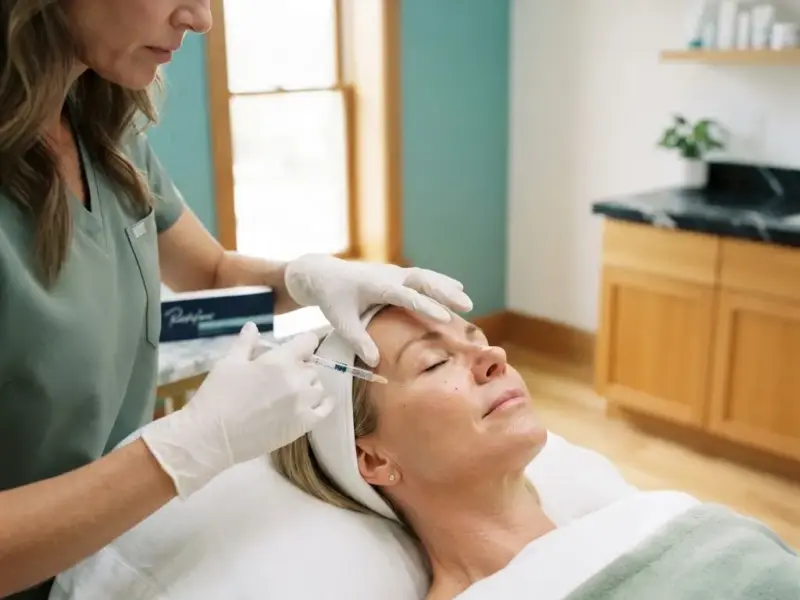
Dermal fillers
From $750Lips, chin, jawline, and cheeks, with your product named up front
Learn more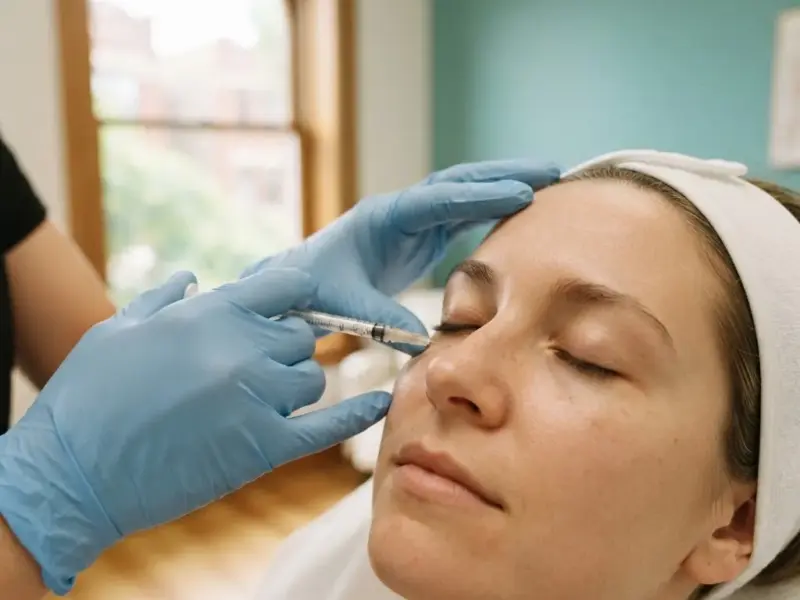
Under-eye hollows (PRF)
From $249Your own PRF for under-eye hollows, dark circles, and crepey lids
Learn more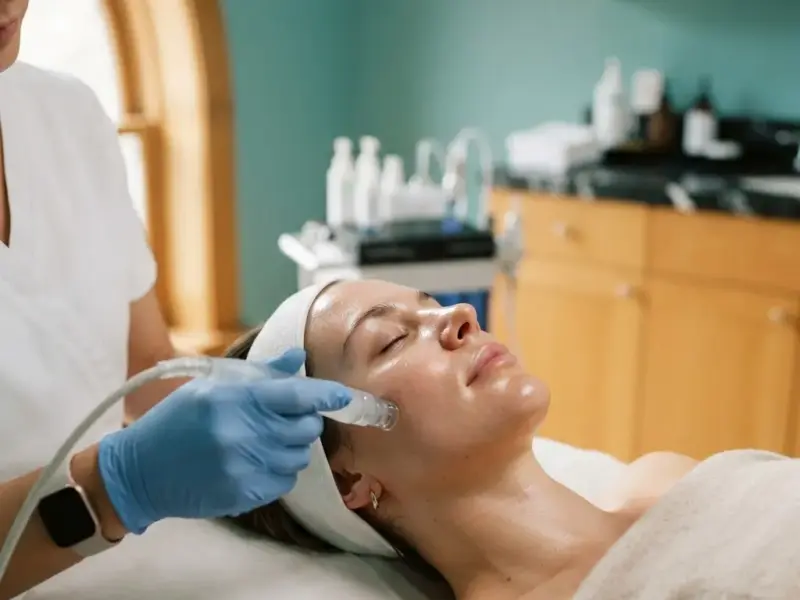
HydraFacial
From $199A 30-minute facial with no downtime and a glow that lasts about a week
Learn more
Start with a consult
Tell us what you’d like to work on. We’ll assess your skin and goals, walk you through your Botox options, and give you a clear plan and price before anything begins.
Afterpay and Klarna are available at checkout for eligible treatments.