
Brighter, smoother under-eyes using your own platelets
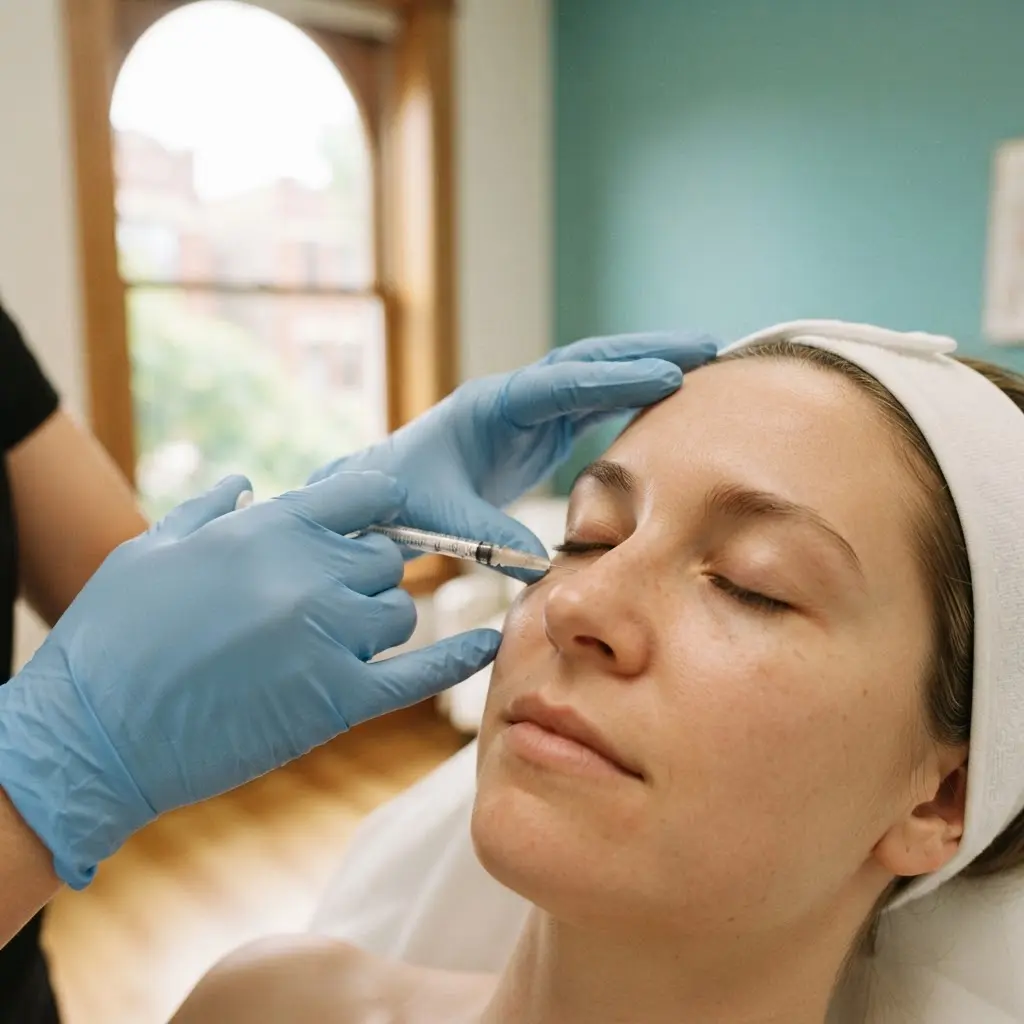
PRF under the eyes is your own blood, spun slower and without anticoagulant so it sets into a fibrin gel, then placed in the tear trough with a cannula. There’s no filler and no foreign material. You’ll have three sessions about four weeks apart, and we’ll judge the result together at month three. At Skinovatio Lincoln Park, it’s the first thing we suggest for hollows, dark circles, and crepey lower lids, especially if you’d prefer to avoid filler.
$249
to start
At a glance
Under-eye PRF- Appointment
- About 45 minutes, topical numbing, cannula
- Downtime
- Puffy day 1, slight fullness day 3, normal by day 7, bruise possible
- First results
- 4 to 8 weeks
- Full results
- Month 3, after the series
- Sessions
- 3, about 4 weeks apart, then maintenance
- Cost
- From $249. About $62 per payment across 4 with Afterpay or Klarna.
What to expect
What the appointment is like
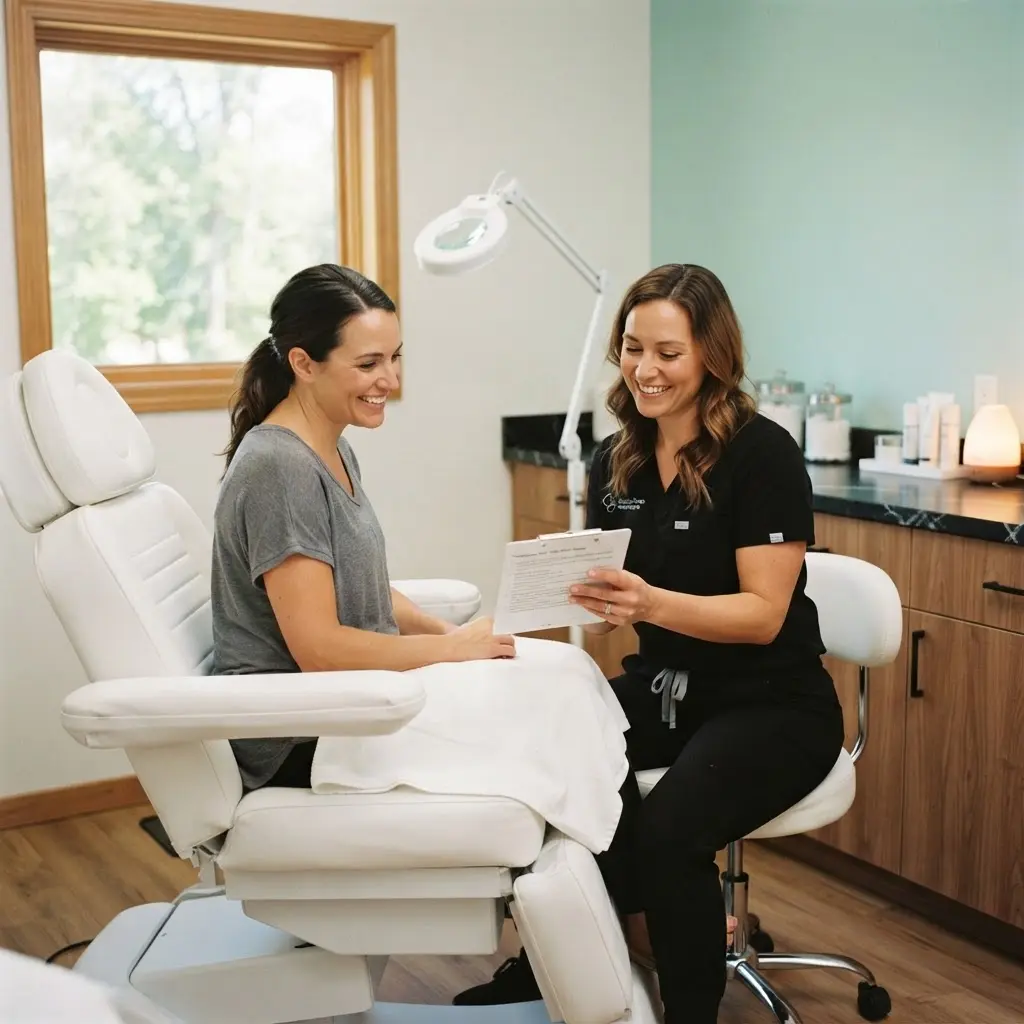
Plan on about 45 minutes. We’ll start with photos, taken from fixed angles under the same light every visit. Topical numbing goes on both under-eyes while we draw blood from your arm and spin it. The PRF is then drawn up and used right away.
Consult and photos
Your provider determines whether the concern is hollowing, pigment, crepey skin, or a fat pad, and whether PRF is the right treatment.
Numbing and draw
Topical anesthetic on both under-eyes, and one tube of blood from your arm.
Spin
A slow spin with no anticoagulant. The PRF is used within minutes, before it sets.
Placement
One cannula entry point per side. You’ll feel pressure, not pinches, for a few minutes each side.
Before you leave
You’ll leave with a cold compress and aftercare instructions: sleep with your head elevated tonight, and skip makeup over the entry points for 24 hours.
Your results
A predictable timeline
You’ll start to see skin quality changes over 4 to 8 weeks as collagen forms. We’ll judge the series result together at about three months, after your third session. The 2025 review found PRF improvements often diminished by six months, while PRP pigment results held at similar intervals, so we’ll build maintenance into your plan, usually every 6 to 12 months. Individual results vary.
Day 0 to 1
Puffy from the gel’s own volume. This isn’t the result.
Day 3
Slight fullness, with the early puffiness gone.
Day 7
Back to baseline. Any bruise has cleared.
Weeks 4 to 8
Skin thickens and smooths. Your second session is at week 4.
Month 3
Third session done. We’ll compare photos against your baseline together.
Month 6 to 12
A maintenance visit as the effect softens.
What it costs
Clear pricing, planned by the visit
A few things shape your cost: how many sessions are in the plan (three is standard), PRF versus PRP, under-eyes only versus under-eyes plus other facial areas, and whether it’s paired with microneedling with PRP in the same visit. We price by series because the evidence is for series. A single session isn’t enough to judge PRF.
- Number of sessions (three is the studied protocol)
- PRF versus PRP
- Under-eyes only versus the whole face
- Whether microneedling is added in the same visit
At Skinovatio Lincoln Park
Under-eye PRF
$249
to start
- Under-eye PRP
- $599
- Microneedling with PRP under the eyes
- $249
- PRP full face
- $450
- PRP face and neck
- $650
- Consultation
- $50
- With Afterpay or Klarna
- About $62 × 4 payments
The injection plan is three sessions 4 to 6 weeks apart, so $1,797 for the under eyes. It’s listed as PRP on our booking menu, and you can ask about PRF at your consult.
Book your Under-eye PRF appointmentSimilar purpose, different options
PRF under the eyes or something else?
Three tools can reach the under-eye, and each one does something different. Filler with a hyaluronic acid product gives immediate, predictable volume and lasts about a year. The FDA-approved products for under-eye hollowing are Volbella XC, Restylane Eyelight, and RHA Redensity Eye. It’s reversible with hyaluronidase, and it carries filler-specific risks: puffiness, a bluish tint called the Tyndall effect when placed too shallow, and lumps. Microneedling with PRP on the lower lid improves texture only and adds no volume at all.
| PRF under eyes | Under-eye filler | Microneedling with PRP | |
|---|---|---|---|
| Best for | Crepe, thin skin, dark circles, mild hollow | Deep hollow, structural shadow | Texture and fine lines |
| Material | Your own blood | Hyaluronic acid gel | Your own blood, on the surface |
| When you see it | 4 to 8 weeks, judged at month 3 | Same day | Brightness in a week, judged at month 3 |
| Holds | Softens by month 6, maintain 6 to 12 months | About a year | Series, then maintenance |
| Reversible | No, and doesn’t need to be | Yes, with hyaluronidase | No |
| Downtime | Puffy 1 to 3 days, bruise possible | Swelling, bruise possible | Pink 1 to 2 days |
Best for
- PRF under eyes
- Crepe, thin skin, dark circles, mild hollow
- Under-eye filler
- Deep hollow, structural shadow
- Microneedling with PRP
- Texture and fine lines
Material
- PRF under eyes
- Your own blood
- Under-eye filler
- Hyaluronic acid gel
- Microneedling with PRP
- Your own blood, on the surface
When you see it
- PRF under eyes
- 4 to 8 weeks, judged at month 3
- Under-eye filler
- Same day
- Microneedling with PRP
- Brightness in a week, judged at month 3
Holds
- PRF under eyes
- Softens by month 6, maintain 6 to 12 months
- Under-eye filler
- About a year
- Microneedling with PRP
- Series, then maintenance
Reversible
- PRF under eyes
- No, and doesn’t need to be
- Under-eye filler
- Yes, with hyaluronidase
- Microneedling with PRP
- No
Downtime
- PRF under eyes
- Puffy 1 to 3 days, bruise possible
- Under-eye filler
- Swelling, bruise possible
- Microneedling with PRP
- Pink 1 to 2 days
Many clients do both: PRF first for skin quality, then a small amount of filler at the deepest point of the trough if a shadow remains at month three. For a tired look that comes from the brow rather than the lid, Botox is a separate option to discuss at your consult.
Is it right for me?
Who it’s for, and who it isn’t
PRF is a good fit if you have crepey or dull under-eyes, early hollowing, or dark circles from thin skin, and you’d prefer your own tissue rather than a filler. Skin quality matters more than age.
A good fit for
- Crepey, dull, or tired-looking under-eye skin
- Mild dark circles or early hollowing
- Anyone who prefers their own blood over a product
- Every skin tone. No heat, no pigment target
Not recommended
- A true fat bag or loose lid skin (surgical is better)
- A deep hollow that needs volume (filler fits better)
- Anyone wanting a visible change right away
- During pregnancy or breastfeeding, or with a bleeding disorder
Any injection under the eye carries a small risk of injuring a blood vessel, and unlike HA filler, PRF can’t be dissolved. Across 14 studies in a 2025 review, no serious adverse events were reported; common effects are swelling, bruising, and tenderness.
In detail
What PRF under the eyes can treat
The under-eye is thin skin over a small amount of fat and many blood vessels. Four different concerns show up there, and each is treated differently.
This is the strongest case for PRF. A 2025 systematic review of 14 studies found PRF was associated with improvements in skin texture, wrinkles, and crepiness, per Sollitto and colleagues in the Journal of Cosmetic Dermatology. Finely lined skin along the lower lid is what the fibrin scaffold is built for.
There are two kinds. Circles from pigment respond better to PRP, the liquid version, which the same review found had the stronger evidence for hyperpigmentation. Circles from thin skin showing the vessels underneath improve as the skin thickens over a series, and that’s where PRF helps. Your provider can tell them apart by stretching the skin.
Early tear-trough hollowing, the shadow that can make you look tired, softens as skin quality improves. A deep hollow needs volume, and for volume, filler is the right tool rather than PRF. We’ll assess which applies to you at your consult.
“Baggy eyes” is usually a mix of shadow and crepe, and that combination tends to do well with PRF. True bags, where orbital fat has pushed forward, are a surgical concern. A 2021 systematic review of periorbital treatments concluded blepharoplasty is best when skin laxity is the cause, per Michelle and colleagues in Dermatologic Surgery. PRF will not remove a fat pad, so we don’t recommend it for true bags.
How it works
Your blood is drawn and spun in a 510(k)-cleared centrifuge kit. For PRF the spin is slower and there’s no anticoagulant in the tube, so the sample starts to clot into a fibrin matrix that traps platelets and white cells. It has to be injected within minutes, before it sets fully.
In the skin, that matrix releases growth factors (PDGF, VEGF, TGF-beta) over days rather than at once. They stimulate fibroblasts and new small vessels, and over weeks the thin under-eye skin gets a little thicker and smoother, per Davies and Miron in Periodontology 2000. That review also noted the few head-to-head studies all favored PRF over PRP, though with small samples and no standard protocol, and its senior author founded a PRF company. That’s worth keeping in mind when reading claims about PRF.
The gel has volume of its own. The fullness you see on the first day is fluid, and it fades over days to weeks. Your result is the gradual skin improvement that follows. PRF and PRP are not FDA-approved for any cosmetic use. They’re autologous and off-label, and the kit is cleared only to prepare platelet concentrate.
Some clinics heat the PRF into a thicker, longer-lasting gel. Ask at your consult if you’d like to know more.
Afterwards
Downtime and aftercare
Day 0: you’ll be puffy under both eyes from the volume of gel, as if you slept badly. Day 1: still puffy, and if a bruise develops, this is when it appears. Day 3: slight fullness, which many people find flattering. Days 3 to 7: any bruise yellows and clears. Day 7: you’re back to normal.
Aftercare is simple. Use a cold compress the first evening, and sleep with your head up the first night. Hold off on makeup over the entry points for 24 hours, and after that, concealer is fine. Avoid rubbing the area. It’s best to skip alcohol and ibuprofen for 24 hours if your doctor agrees. You can return to workouts the next day.
We suggest allowing at least a week before any photographed event, since bruising can’t be predicted.
Why here
Why Lincoln Park
We’re on Lincoln Avenue just north of Wrightwood, a block up from the Apollo Theater, at the seam where Lincoln Park meets Lakeview. Take the Brown Line to Diversey, then head south on Lincoln, or hop on the 11 Lincoln bus to the block. There are meters on Lincoln, and free spots on the side streets west of Clark if you check the cleaning signs. Midday appointments tend to book up first.
For a wedding, plan for your last session 6 to 8 weeks before the date, which means starting the series about four months ahead. Your sessions will be with our nurse practitioner.
Questions
Common questions, answered
PRP under the eyes is platelet-rich plasma from your own blood, spun in a centrifuge and injected into the under-eye area to improve skin quality and dark circles. PRF is the same idea with a slower spin and no anticoagulant, so it forms a fibrin gel that releases growth factors over days instead of at once.
PRP is liquid and has the stronger evidence for pigment. PRF has the better texture data and a short-lived volume effect from the gel. Neither is FDA-approved for cosmetic use, and both are your own tissue.
It depends on the number of sessions in the plan (three is standard), whether it’s PRP or PRF, whether you’re treating the under-eyes only or other areas of the face too, and whether it’s combined with microneedling in the same visit. Series are priced differently from single sessions because the evidence is for series.
Your consult ends with a written plan and a price quote. A small non-refundable deposit comes off your treatment.
Skin quality gains from a three-session series are judged at month three. A 2025 systematic review found PRF improvements often diminished by six months, while PRP results for pigment held at similar intervals.
Many people keep it up with a single session every 6 to 12 months. Individual results vary.
They’re different. Tear trough filler is a hyaluronic acid gel that adds volume the same day and lasts about a year. PRF is your own blood, sets into a fibrin gel, and improves skin thickness and texture gradually over weeks. Its day-one fullness is fluid and fades.
Filler is the tool for a deep structural hollow. PRF is the tool for crepe, thin skin, and mild shadow. Some clients use both, starting with PRF.
It helps circles caused by thin skin showing the vessels underneath, because the skin thickens over a series. For circles caused by pigment, PRP has the stronger evidence, and your provider may suggest PRP or a mix.
Circles caused by a hollow casting a shadow improve as the hollow softens, but a deep hollow needs filler.
Yes, and it’s the best-supported use. A 2025 review of 14 studies linked PRF to improvements in skin texture, wrinkles, and crepiness, with only mild, short-lived side effects.
You can expect to see the change over 4 to 8 weeks after each session, with three sessions about four weeks apart. It’s gradual and subtle rather than dramatic.
Slightly full, in a way many people like, with the day-one puffiness gone. If you bruised, day three is when it starts to yellow. No entry point is visible, because a cannula leaves one pinprick per side.
Concealer is fine to use by day three.
Yes. On day one you’ll be puffy under both eyes, which looks similar to a short night’s sleep. If a bruise develops, it also shows on day one and can be covered with concealer after the first 24 hours.
If you have an important meeting, book PRF for a Thursday or Friday and schedule the meeting for the following week.
Yes, and ideally in that order. PRF improves skin quality first, over a three-month series. If a structural shadow remains at month three, a small amount of hyaluronic acid filler at the deepest point of the trough finishes it.
Doing filler first tends to hide what PRF would have fixed, and adds volume where thin skin was the real problem.
Aim for your last session 6 to 8 weeks before the date, which means starting the three-session series about four months out. That gives the third session time to settle and leaves a margin in case of a bruise.
We don’t recommend a session within two weeks of the date, since puffiness or bruising could show in photos.
PRF is made from your own blood, and your body metabolises it. If you don’t like the result, it resolves on its own over months. Filler under the eye would need to be dissolved, while PRF fades naturally.
Keep exploring
Related treatments
Related priorities
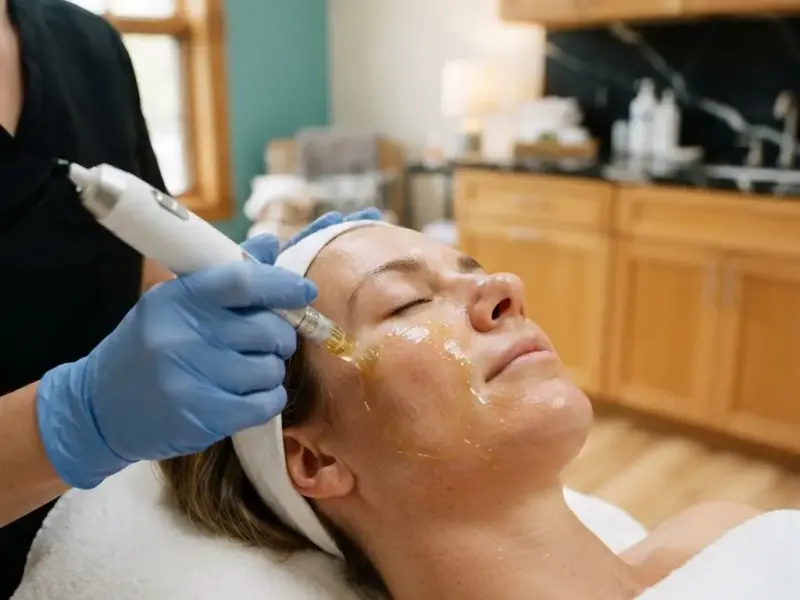
Microneedling with PRP
From $499Your own platelets to help with acne scars, texture, and tone
Learn more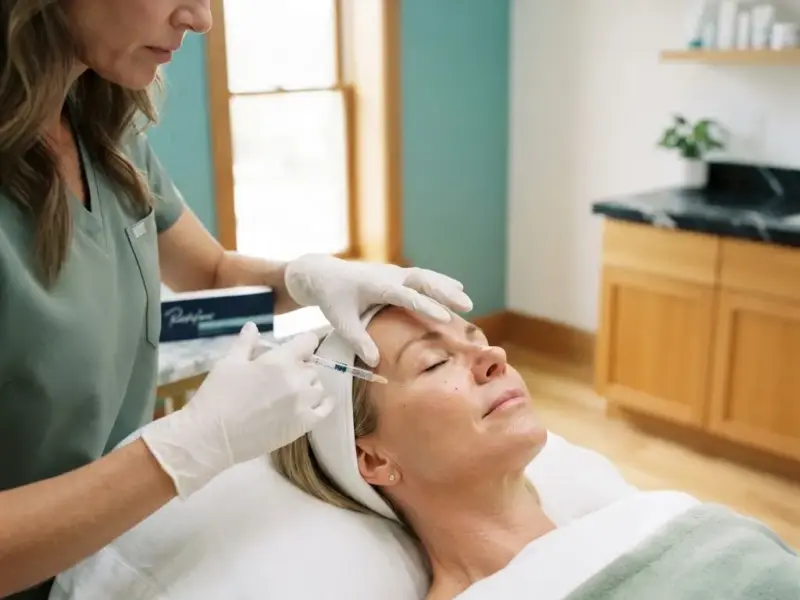
Dermal fillers
From $750Lips, chin, jawline, and cheeks, with your product named up front
Learn more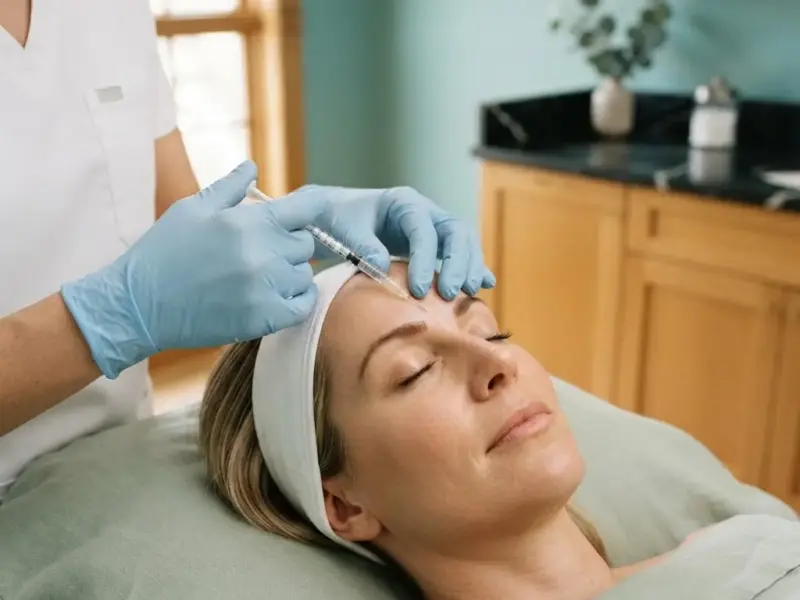
Botox and neuromodulators
From $480 a visitFive products to choose from, priced by your plan, not the unit
Learn more
Start with a consult
Tell us what you’d like to work on. We’ll assess your skin and goals, walk you through your Under-eye PRF options, and give you a clear plan and price before anything begins.
Afterpay and Klarna are available at checkout for eligible treatments.