
A precise lift for small, delicate areas
The Plasma Pen makes a grid of tiny carbon-crusted dots that tighten the skin as they heal: upper eyelids, upper-lip lines, small patches of neck crepe. You’ll start with one session per area. Expect crusts by day three that are gone by day seven, some pinkness for a few weeks, and a result the studies measured at three months. At Skinovatio Lincoln Park, on Lincoln Avenue just north of Wrightwood, we offer it October to April on lighter skin types only.
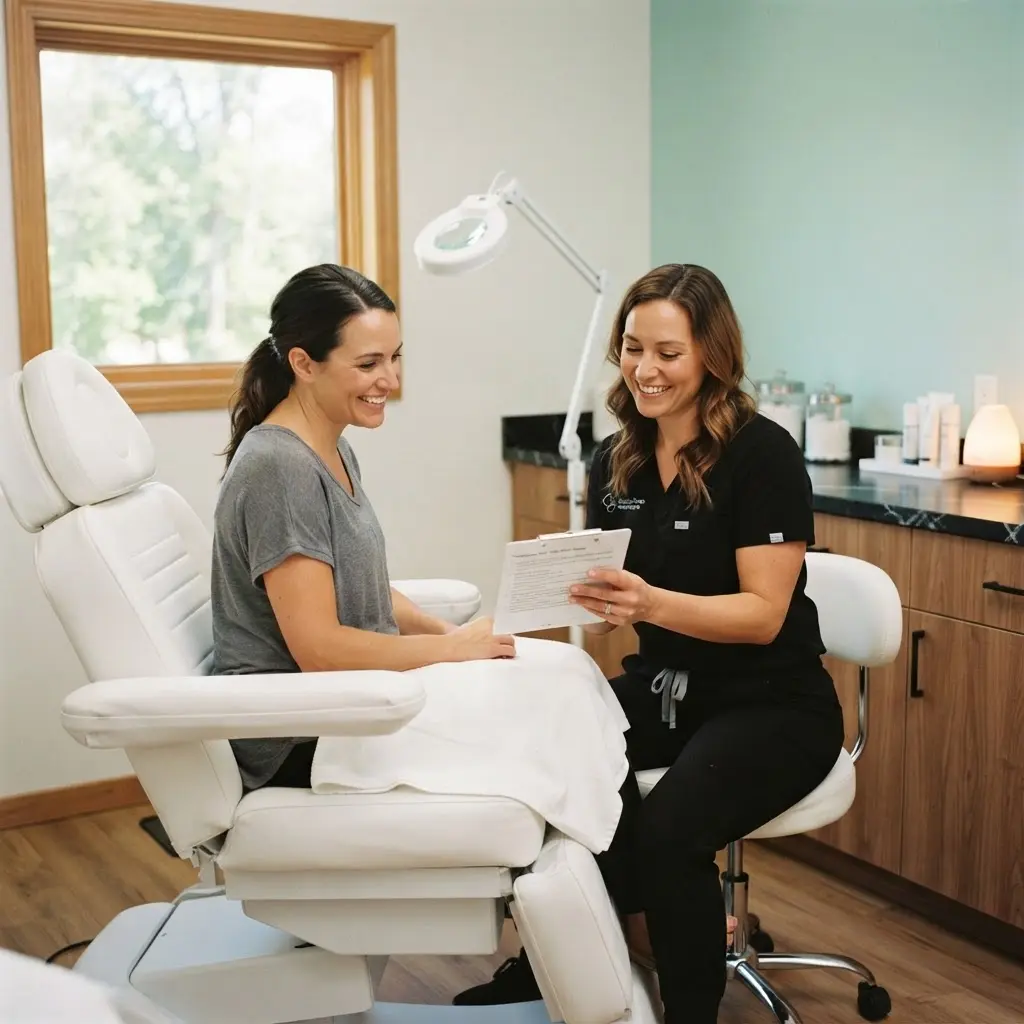
Consult
priced at your visit
At a glance
Plasma Pen- Appointment
- 30 to 60 minutes after 30 to 45 minutes of numbing
- Downtime
- Crusts for about a week, pink dots for 2 to 8 weeks
- First results
- Some tightening as swelling settles, weeks 1 to 2
- Full results
- Measured at 3 months in the published trials
- Sessions
- 1 to 3 per area, 4 to 8 weeks apart
- Cost
- Priced at your consult. Financing available.
What to expect
What the appointment is like
We start with numbing cream for 30 to 45 minutes, then treatment takes 30 to 60 minutes. Each dot feels like a sharp sting with a flash of heat, and you’ll notice a burning smell, which is expected. For eyelid work, we place eye shields first. An upper lip is quick. Upper lids take longer because the skin is thinner and the work is more precise.
Consult
We’ll check your skin type against the Fitzpatrick scale, look at how much skin is loose versus how much is fat, and ask about keloids, cold sores, isotretinoin, and implants. If you have lighter skin and mild laxity, the pen is a good option. If not, we’ll recommend a better-suited treatment.
Numbing
Topical anesthetic for 30 to 45 minutes. Eye shields go in for lid work.
Treatment
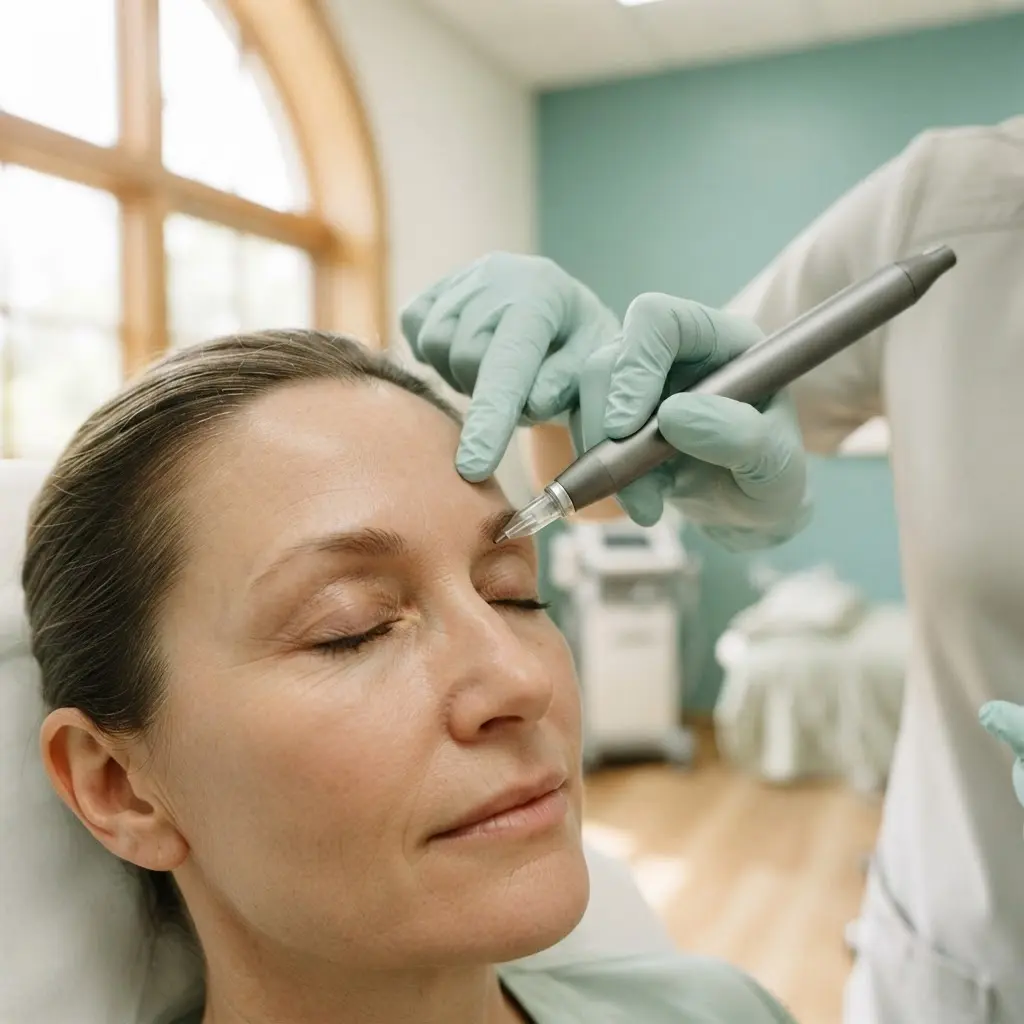
Your provider places the dots in a grid, spacing them so the skin between can contract. The tip never touches the skin. Treatment takes thirty to sixty minutes, depending on the area.
Before you leave
We apply a healing ointment or aftercare product, go over what to expect each day of the first week, and explain sun protection while you heal, including sunglasses, since makeup can’t go on until the crusts are gone.
Your results
A predictable timeline
You’ll start to see some tightening once the swelling settles, at one to two weeks. The trials measured results at three months after the last session, and that’s the best point to judge by. There are no long-term studies. Manufacturers claim results last years, but without published data. Individual results vary.
Days 1 to 7
Swelling, crusts, then bare pink dots. This stage is healing, so no result shows yet.
Weeks 2 to 4
The swelling is gone, and the first tightening shows on the lid or lip. Dots are still faintly pink.
Weeks 4 to 8
Your second session, if one is planned. Dots are fading.
Month 3
The endpoint the studies measured. We’ll retake photos and decide together whether another session would help.
Beyond
There’s no long-term data. Plan on an eventual touch-up, and keep up daily sunscreen.
What it costs
Clear pricing, planned by the visit
Pricing depends on the area, and we’ll quote yours at your consult. A few things shape your cost: the size of the area (upper lids, under-eyes, or lip lines), the number of sessions, and numbing time. Lip lines often need just one session. Lids take one to three, and we assess the need for more at the three-month mark, so you don’t pay for sessions in advance. Every treatment starts with a consultation and a written plan, and a small non-refundable deposit holds your booking and comes off your treatment.
- The size of the area treated
- The number of sessions
- Numbing time
- Whether you start with a single session
At Skinovatio Lincoln Park
Plasma Pen
Consult
priced at your visit
- Consultation
- $50
- Financing
- Cherry, Affirm, Afterpay
Plasma Pen isn’t on the Lincoln Park online booking menu. Ask at your consult and we’ll quote your area.
Book your Plasma Pen appointmentSimilar purpose, different options
Plasma Pen or something else?
People often compare these three tools for the same areas, but each one does something different.
| Plasma Pen | PDO threads | Botox | |
|---|---|---|---|
| What it does | Shrinks the skin itself with a grid of micro-wounds | Repositions the brow and lid with dissolvable sutures | Relaxes the muscle that creases the skin |
| Downtime | A week of crusts, pink for weeks | Tender and tight 2 to 3 days | None |
| How long | Studies measured at 3 months, no long-term data | About 12 to 18 months | 3 to 4 months |
| Skin types | I to III only | All | All |
What it does
- Plasma Pen
- Shrinks the skin itself with a grid of micro-wounds
- PDO threads
- Repositions the brow and lid with dissolvable sutures
- Botox
- Relaxes the muscle that creases the skin
Downtime
- Plasma Pen
- A week of crusts, pink for weeks
- PDO threads
- Tender and tight 2 to 3 days
- Botox
- None
How long
- Plasma Pen
- Studies measured at 3 months, no long-term data
- PDO threads
- About 12 to 18 months
- Botox
- 3 to 4 months
Skin types
- Plasma Pen
- I to III only
- PDO threads
- All
- Botox
- All
PDO threads lift a brow so the lid looks less hooded, without touching the lid skin. Botox softens crow’s feet and can do a lip flip, off-label. Neither leaves a dot grid. If muscle movement is causing your lines, Botox is usually the place to start. If it’s loose skin on a small area and you have a lighter skin type, the pen treats the skin itself.
Is it right for me?
Who it’s for, and who it isn’t
You’re likely a good candidate if you have Fitzpatrick skin type I to III, mild skin excess on a small area, realistic expectations, a week you can set aside for visible healing, and a season when you can stay out of the sun.
A good fit for
- Mild upper-eyelid hooding
- Vertical lip lines (“smoker’s lines”)
- Crepey skin under the eyes or in small patches
- Lighter skin, Fitzpatrick types I to III
Not recommended
- Darker skin (Fitzpatrick IV to VI), real risk of a dark mark
- Heavy hooding or fat bags (blepharoplasty fits better)
- A history of keloid scars, or an active cold sore
- A pacemaker or implant, or during pregnancy
FDA-cleared plasma pens are cleared as electrosurgical tools for removing skin lesions and coagulating tissue, none is cleared for lifting eyelids or tightening skin. Those are off-label uses supported by two small studies rather than long-term data.
In detail
What the Plasma Pen can treat
It’s designed for small areas of loose skin, in skin types that heal without pigment problems. Because the pen works dot by dot, it suits a lid or a lip rather than the whole face.
This is for mild hooding, where the lid skin has started to rest on the lash line. Two small trials treated exactly this, in 40 and 56 women, with three sessions a month apart, and measured meaningful improvement at three months with no serious adverse events, per Hassan et al., 2022 and Abdollahimajd et al., 2022. Neither had a control group. If your hooding is heavy or there’s a fat pad, an eyelid surgeon is the better choice.
These are the fine vertical lines above the lip, where lipstick tends to bleed. Filler fills them and Botox relaxes the muscle behind them, while the pen treats the skin itself.
This is for fine crepiness at the outer corner of the eye and underneath it, where a small patch of loose skin is the whole concern.
The pen can treat a small patch of crepey skin, but not the whole neck. For larger areas, Morpheus8 is a better fit.
On-label, the pen removes small skin tags and lesions. All of the uses above are off-label.
How it works
The handpiece ionizes the air between a fine tip and the skin, which makes a tiny plasma arc. The arc vaporizes a pinpoint of outer skin and sends heat into the layer below. Each dot forms a small carbon crust, and the skin between the dots contracts as the grid heals. Fibroblasts activate during that healing, which is where the name comes from, though most of what you’ll see is surface contraction rather than a deep lift.
FDA clearance depends on which pen a clinic uses. Several plasma pens hold 510(k) clearances as electrosurgical devices, with the same cleared wording: “intended for the removal and destruction of skin lesions and coagulation of tissue,” per FDA 510(k) K223440. None is cleared for eyelid tightening, skin tightening, or wrinkles. Those are off-label uses. Many pens sold online have no clearance at all, and a 2022 paper on the treatment’s spread on TikTok lists “dyspigmentation, scarring, and mechanical burns” as the risks, per Hernandez et al., 2022. It’s worth asking any clinic, including ours, which pen it uses.
Afterwards
Downtime and aftercare
Here’s what the first week typically looks like.
Day 0: you’ll be red and swollen, with a grid of brown dots. Days 1 to 3: swelling peaks, and upper lids can swell shut for a day or two, so plan a few quiet days. The dots harden into crusts, which is part of normal healing. Days 4 to 7: the crusts fall away on their own. A lip grid looks like a rash up close, but by about day five it’s much less noticeable at a normal distance. Glasses help cover lid crusts. Weeks 2 to 8: pink or slightly darker dots gradually fade. In skin prone to it, darker dots can last months.
Aftercare is straightforward. Don’t pick at any crust, and keep the area clean and dry as we show you. Hold off on makeup until every crust is gone, on retinoids or acids until you’ve healed, and on swimming or saunas until the skin has closed. After that, strict sun avoidance and daily sunscreen for 8 to 12 weeks are essential, which is why we schedule this treatment from October through April. Wind can dry crusts too early, so wear sunglasses outdoors.
Why here
Why Lincoln Park
You’ll find us on Lincoln Avenue just north of Wrightwood, a block up from the Apollo. Take the Brown Line to Diversey, then head south on Lincoln, or hop on the 11 Lincoln bus to the block. There are meters on Lincoln, and free spots west of Clark if you check the cleaning signs.
We offer the Plasma Pen as a fall and winter treatment. From October through April, sun exposure is lower, which makes strict sun avoidance during healing easier. If you’re planning around a wedding, the result is measured at three months, so a June wedding means a February session, with a second in March if needed. We also avoid treating lids right before long stretches outdoors in wind, which can dry crusts too early.
Many patients book late in the week so the most swollen days fall over the weekend. Your provider is our medical esthetician.
Questions
Common questions, answered
Plasma fibroblast is the marketing name for Plasma Pen treatment. A handheld device makes a tiny plasma arc between its tip and the skin, which vaporizes a pinpoint of surface skin and heats the layer below. Dots are placed in a grid, each forms a small crust, and the skin between them contracts as the grid heals. Fibroblasts activate during that healing, hence the name.
Filler fills the lines from below and lasts months. The pen treats the loose skin the lines sit in, with a week of crusts and a result measured at three months. If you have lighter skin with fine etched lines, the pen addresses the cause. For deeper lines or darker skin, filler or a Botox lip flip is the safer first step.
Some are, but for a narrower use than the one you’ll see advertised. Cleared plasma pens are cleared “for the removal and destruction of skin lesions and coagulation of tissue,” not for eyelid tightening or wrinkles, which are off-label. Many pens sold online have no clearance at all. You can ask us which pen we use.
Day 0: you’ll be red and swollen, with a grid of brown dots. Days 1 to 3: swelling peaks, lids can swell shut for a day or two, and the dots crust over. Days 4 to 7: the crusts fall off on their own. After that, expect pink or slightly darker dots for two to eight weeks, and longer in skin prone to pigment. We’ll walk you through each day before you leave.
Days 1 to 3 are the most visible, especially for lids, which can swell shut. From about day 5, a lip grid is much less noticeable, and glasses help cover lid crusts. Many people book on a Thursday so the most swollen days fall over the weekend.
It treats the loose skin the vertical lip lines sit in, which filler and Botox don’t. You can expect a week of crusts on the upper lip and a result judged at three months. It works best on fine, etched lines in lighter skin. Deeper lines usually need a combination of treatments.
A small patch of crepey skin, yes, but not the full neck. A large grid on the neck means a large area of crusting and pigment risk. For neck laxity, we use Morpheus8 instead, which has more evidence and no dot grid.
They do different things. The pen shrinks the lid skin itself, in lighter skin types, with a week of crusts. PDO threads lift the brow so the lid looks less hooded, in any skin type, with two or three tender days. Mild lid excess on light skin points to the pen. A heavy brow points to threads, and heavy hooding with a fat pad points to a surgeon. We’ll confirm which fits you at your consult.
We don’t offer the Plasma Pen if any of these apply: Fitzpatrick types IV to VI, keloid or hypertrophic scar history, an active infection or cold sore, pregnancy or breastfeeding, a pacemaker or implanted electronic device, metal implants near the area, recent isotretinoin, or true fat bags or heavy hooding. It’s also not the right choice if you can’t allow a week of visible healing and a season of strict sun avoidance.
We recommend at least three months. That’s when the studies measured the result, and when the pink dots have faded. A June wedding means a February session, with room for a second in March. Any closer, and you risk visible dots in your photos.
It isn’t reversible. It’s a controlled injury to the skin surface, and the result is however that heals. That’s why we treat a small area first, and why skin type screening is always part of your visit.
Keep exploring
Related treatments
Related priorities
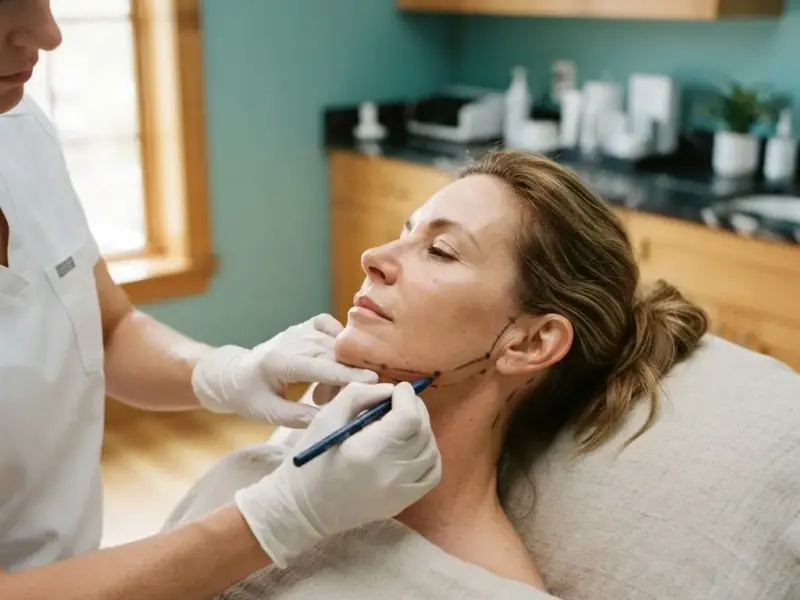
Thread lift (PDO)
Priced at your consultA non-surgical lift to help with early jowls, brow, and neck
Learn more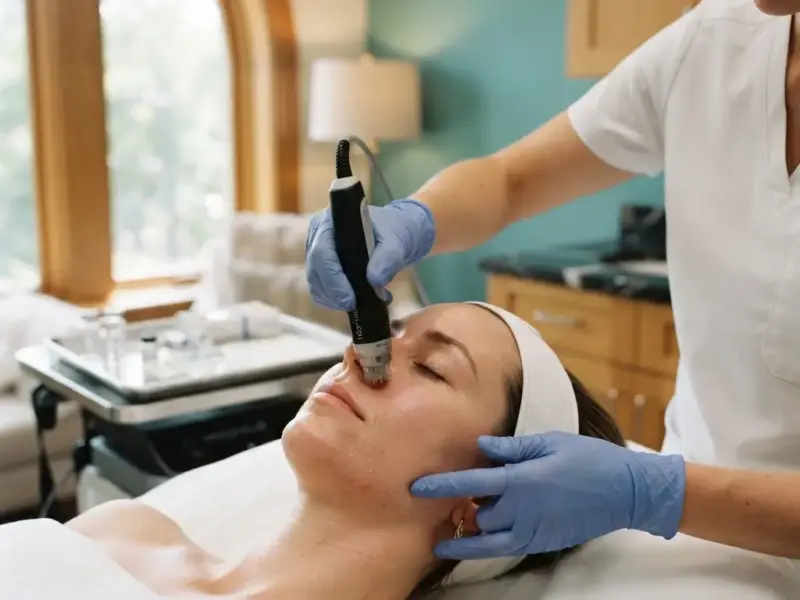
Skin tightening (Morpheus8)
From $1,200RF microneedling for jawline laxity, neck skin, and acne scars
Learn more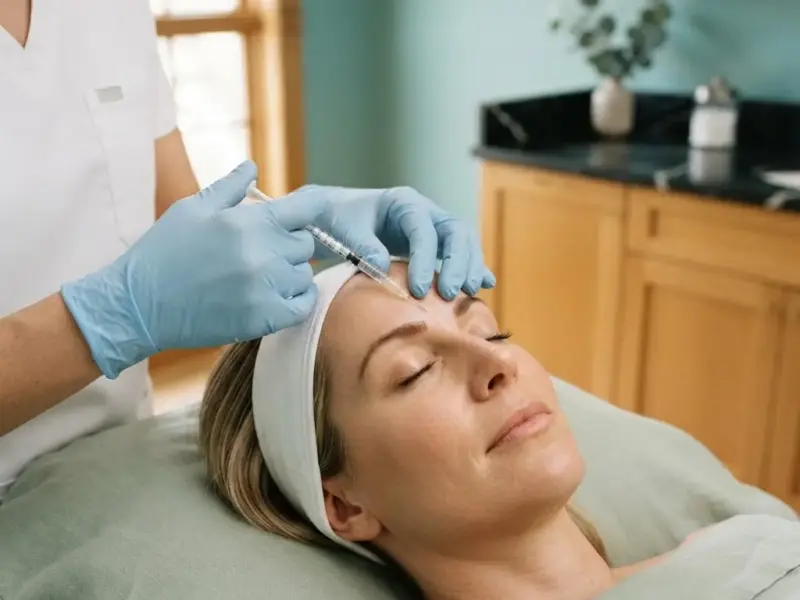
Botox and neuromodulators
From $480 a visitFive products to choose from, priced by your plan, not the unit
Learn more
Start with a consult
Tell us what you’d like to work on. We’ll assess your skin and goals, walk you through your Plasma Pen options, and give you a clear plan and price before anything begins.
Afterpay and Klarna are available at checkout for eligible treatments.