
Priorities
Sun spots and pigmentation
Brown spots, melasma, and uneven tone from sun exposure, each treated according to its cause.
Treatments from $200
The short version
Pigmentation usually takes one of two forms. Sun spots show up as a scatter of brown across the cheekbones and the backs of the hands after years of sun exposure. Melasma shows up as a symmetrical shadow across the upper lip and cheeks that tends to fade in winter and return each summer.
The distinction matters: sun spots respond well to light-based treatment, while melasma can get worse with it. Identifying which one you have is the first step.
Why it happens
How brown spots form
Skin makes extra pigment to shield itself from the sun. Over years, some of it gathers into sun spots. Melasma is a different story: hormones play as big a part as sun, and it spreads in soft patches that deepen each summer.
Sun spots add up over time
UV exposure prompts extra pigment, which collects into flat brown spots on the areas that see the most sun.
Melasma is partly hormonal
It often shows up during pregnancy or after starting birth control, and it's more common in medium to dark skin.
Both darken in summer
Sun draws pigment up, so spots and patches look stronger in summer and soften in winter.
Your options
How we'd approach it
-
Step 1We'd start with
IPL photofacial
From $249
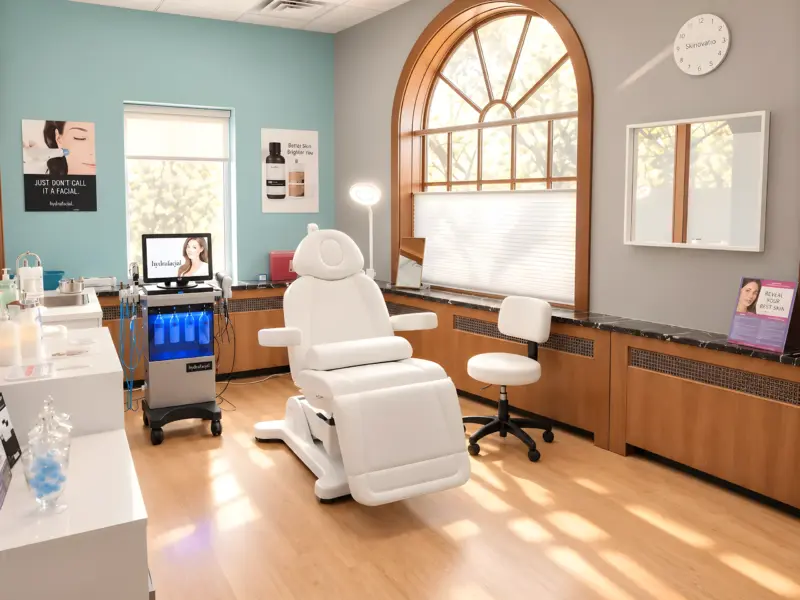
About IPL photofacialIf the spots are discrete and your skin is lighter, IPL is the fastest route. Our medical esthetician can treat your face, neck, or hands in three to five sessions. The spots darken and look like coffee grounds for about a week, then flake off.
-
Step 2If you need a little more
A VI Peel series
From $200
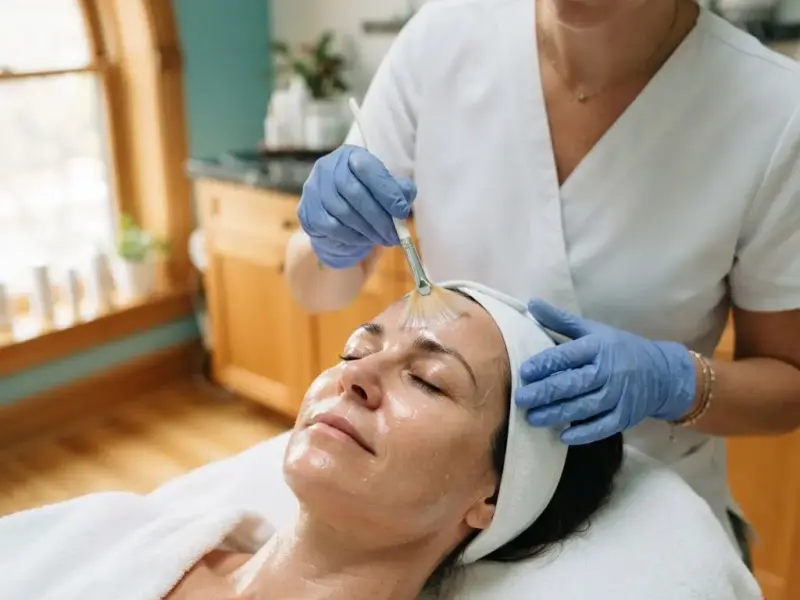
About A VI Peel seriesIf your skin is medium to dark, or the pigment is a mask that flares in summer, that's melasma, and IPL can trigger a rebound. Instead, we'd suggest a VI Peel Precision Plus series, which lifts pigment more gently and is the safer route in darker skin.
Side by side
Your options side by side
The right treatment depends on the type of pigment and your skin tone. Here's how ours compare.
We'd start with
IPL photofacial
From $249
- Best for
- Discrete sun spots on lighter skin (types I to IV), October through April
- Appointment
- 20 to 40 minutes, cooling gel, usually no numbing
- Downtime
- Red and warm for hours. Spots darken and flake days 1 to 7
- First results
- Spots lighten as they shed at 1 to 2 weeks. Redness improves over 2 to 4 weeks
- Sessions
- 3 to 5, spaced 3 to 4 weeks apart
If you need a little more
VI Peel Precision Plus
From $200
- Best for
- Melasma, or pigment on medium to dark skin
- Appointment
- 20 to 45 minutes, no numbing for light peels
- Downtime
- Light peel: pink that evening, flaking days 3 to 7. Medium peel: 7 to 14 days
- First results
- Brighter skin once the flaking stops, about a week out
- Sessions
- Light peels: 3 to 5, every 2 to 5 weeks. Medium: one, repeated no sooner than 3 to 6 months
Microneedling with PRP
From $499
- Best for
- An add-on for melasma, with daily sunscreen
- Appointment
- 60 to 75 minutes including the draw and numbing
- Downtime
- Pink for 24 to 48 hours, light flaking by day 3 to 5
- First results
- Brightness in a week, texture in a few weeks
- Sessions
- 3 to 6, spaced 4 weeks apart
Prices are starting prices from our menu. Your provider will confirm the plan and total cost at your consult. Individual results vary.
What to expect
What to expect after IPL
Spots darken like coffee grounds and flake away over about a week. The full result shows a month after your last session.
Day 0
Red and warm for a few hours. A cool compress helps, and it's best to skip the sauna or hot yoga.
Days 1 to 3
Spots darken into the coffee-grounds look. Makeup with SPF is fine.
Days 4 to 7
Flaking begins as spots lift and shed. Don't pick.
Weeks 1 to 2
Spots look visibly lighter, and redness starts to settle.
Weeks 3 to 4
Time for your next session. This is when the redness improvement shows.
One month after the last session
We'll review your series result together and book maintenance for the following autumn.
Timeline for IPL, from our treatment page. Individual results vary.
Our reasoning
Sun spots or melasma: telling them apart
We’ll ask you three questions. Did the spots arrive one at a time, or as a symmetrical patch during pregnancy or while on the pill? Do they darken after time in the sun? And what’s your natural skin tone?
For discrete spots on lighter skin, we use IPL, a broad-spectrum light rather than a laser, FDA-cleared for benign pigmented and vascular lesions. A 2022 systematic review of 16 studies with 637 participants, all skin types I to IV, found benefit for sun spots, blotchy pigment and texture after a mean of 4.29 sessions, with the caveat that nine studies were of low quality, per Archives of Dermatological Research.
A symmetrical mask that flares with sun is melasma. The IPL clearance technically lists it, but the evidence review on energy devices for melasma warns of a high risk of lasting side effects with aggressive approaches and recommends combination treatment, per Dermatologic Therapy. For melasma, we’ll start with a VI Peel series, consistent daily sunscreen, and sometimes a dermatologist’s prescription first. Microneedling with PRP is a supported add-on: a 12-study review found a large improvement in melasma at 12 weeks when needling was paired with topical treatment, per JAAD. Individual results vary.
If you have any new, irregular, or growing spot, we’ll ask you to have it checked by a dermatologist before any treatment.
Your questions, answered
When do you offer IPL in Lincoln Park?
From October through April. Summer makes it hard to avoid sun for two weeks around each session, and tanned skin raises the burn risk. If you start in October, a three-session series will be complete well before the sunnier months.
What does my skin look like the week after IPL?
Expect redness for a few hours on day 0. On days 1 to 7, the spots darken and look like coffee grounds, similar to freckles, and then flake off. This darkening is expected, since it's how the pigment clears. Makeup is fine after day 1.
Can I treat the backs of my hands?
Yes. Hands are on the Lincoln Park IPL menu, and the backs of the hands often show sun damage early. The same guidelines apply as for the face: three to five sessions, no sun for two weeks on either side, and gloves or sunscreen on your hands outdoors afterward.
How can I tell if it's melasma or sun damage?
Sun spots usually appear one at a time after years of sun. Melasma tends to be a symmetrical, patchy shadow across the cheeks, forehead or upper lip, often linked to pregnancy or the pill, and it darkens in summer. We'll ask a few questions and look closely before choosing a treatment.
Do sun spots come back after treatment?
Treated spots usually stay lighter, but new ones can form with more sun. Daily sunscreen and a maintenance session or two a year keep your tone even.
Also used for this
From the clinic
Compare and decide · 6 min read
Microneedling vs chemical peel: pick by problem, not by trend
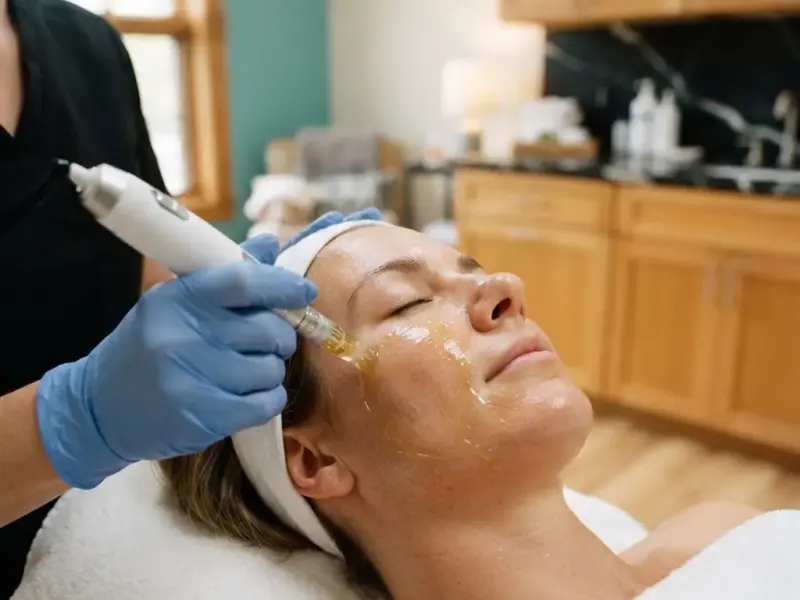
The simplest way to choose is to consider where the problem is. Scars, pores, and fine lines sit in the dermis, where needles can reach them.…
Local · 5 min read
Lakeview, Wrigleyville, and Lincoln Square: how to choose a med spa when five are on your Brown Line
It helps to choose a med spa on six questions rather than distance alone: who injects, which device, what it will cost in total, whether they'll…